













 Beyond Design: How Signals Survive the Hostile PCB Environment
 Connect the Dots: What Designers Should Know About Non-conductive Via Fill
 Target Condition: The Modern Masters of Signal Integrity and AI-driven Design



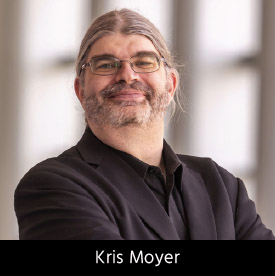
Kris Moyer, a design instructor for the Global Electronics Association, will be teaching his advanced PCB design class this fall. If you’re ready to level up your design education, you won’t want to miss this interview.
The PCB Design for Emerging Design Technologies course is designed to provide the skills necessary to create PCB/PBA designs that require cutting-edge emerging design technologies and comply with all necessary IPC standards, including new standards being developed in this area.
Kris lives in his RV, usually on his property near Sacramento, but he’s been known to travel thousands of miles for a great camping spot. I asked Kris to give us an update on his summer activities and a preview of what attendees can expect to get out of this six-week class.
Marcy LaRont: Kris, it’s always good to catch up with you. Where are you right now, and have you been hiking a lot this summer?
Kris Moyer: I was just in Grover Hot Springs near Markleeville, California. I spent one weekend there, and now I am back in Sacramento. In mid-August, I was at William Kent Campground near Lake Tahoe, California. I’ve been doing lots of hiking this summer. With my mom's passing in May, and following her last wishes, she was cremated, and she wanted her ashes spread in all the places she enjoyed. So, each camping weekend, I go on a hike with my friends and spread a bit of Mom at each location I visit.
LaRont: That’s great. Now, your online advanced design course, PCB Design for Emerging Design Technologies, is coming up in early October. Please explain what you mean by “emerging design technologies.”
Moyer: This course is intended to discuss the newest technologies used in the electronics industry, including technologies for which no standards have been defined yet.
LaRont: Through your work as an instructor, you see designers of different levels and the challenges they struggle with. What specific things do you think attendees will find most valuable in this course? Are any particular technologies getting a lot of traction right now?
Moyer: Yes, this course will cover two primary technologies. The first is ultra HDI. We have discussed UHDI in several Design007 Magazine articles and interviews, and I am putting together concepts for designing PCBs using its features. UHDI is necessary for designs that incorporate the newest micro-miniature package options.
The second is 3D printed electronics. While I do cover printed electronics in the current Advanced Design Concepts course, those are more in line with traditional 2D printed materials, similar to inkjet printers or other printed media. In the new course, we will be looking at 3D printing the structures in the electronic systems.
The 3D printed electronics are becoming more prevalent as silicon-to-systems design is taking a more central role in design. This is the logical extension of rigid-flex PCB design. Rather than producing a series of flat PCBs connected with flex circuits that are folded into the shape necessary for the product, with 3D printing, the solid structure is created in the final shape configuration with parts mounted on all the different surfaces, rather than just the top and bottom surfaces like traditional boards
LaRont: This course is broken up into 12 sessions. What details can you provide?
Moyer: The course is six weeks long, with two weekly sessions on Tuesdays and Thursdays. Each session is two hours long. The first session of each week is new theory content. The second session is a hands-on practice of that theory using a leading ECAD design tool. The courses are designed to be similar to live college classes in that they are interactive and students are encouraged to ask questions during class rather than waiting until the end for a Q&A session.
LaRont: Will the recording be available to registrants after the live virtual sessions?
Moyer: This class is designed to be a live, online instructor-led class. It will be recorded while being presented and typically posted to the course page by the next business day. Registered students will have access to the course content, including the videos, for one year after completion of the course.
LaRont: Kris, what makes these types of educational opportunities so valuable for attendees?
Moyer: These live, instructor-led courses allow students to gain interactive access to the instructor's knowledge and experience. Students can ask questions and gain additional clarification and insight on any design topic that may be important to them.
LaRont: Is there anything else you would like potential registrants to know about this course?
Moyer: These IPC courses have proven to be an excellent source of knowledge, allowing our students to develop successful, high-quality, high-first-pass yield, and high-reliability designs for their applications.
For more information or to register for this class, click here.
PCB Design for Emerging Design Technologies
Six-week course runs from October 7 – November 13
Two-hour classes, Tuesdays and Thursdays
10 a.m. Pacific/1 p.m. Eastern


