














 Elementary, Mr. Watson: Waking Up Europe's PCB Giants
 Connect the Dots: Getting the PCB Quote Right
 Powering the Future: What Engineers Get Wrong About Designing for Reliability






Target Condition: Life in the Engineering Ecosystem
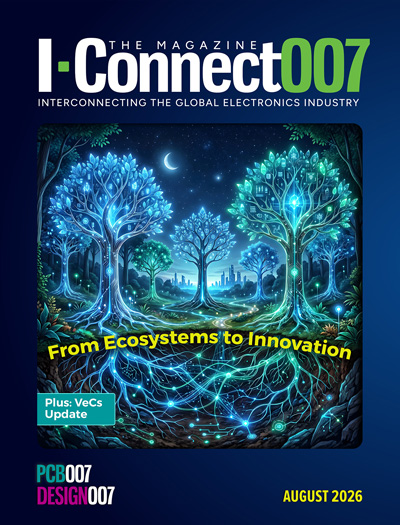
A while back, I started thinking about the word ecosystem, a term that's become almost mandatory in discussions about electronics: the PCB ecosystem, the electronics ecosystem, and the design ecosystem. Is it more than an overused metaphor, or what if it really is an ecosystem?
That question sent me down the kind of rabbit hole I enjoy. I started imagining electrical engineers, product managers, PCB designers, manufacturing and test engineers, supplier management, quality, and everyone else we work with fitting into the same kind of biological classification system we learned in high school.
It sounds a little odd (perhaps evidence I've spent too many years writing DFM analysis reports), but the analogy holds up surprisingly well. None of these disciplines survives in isolation. Like organisms in nature, each depends on the others, each contributes something essential, and when one struggles, the whole system feels it.
As PCB designers, we can fall into the trap of thinking we're the center of the project. After all, without us, there's nothing to build or test. But really, we're just one specialized organism sharing a habitat with many others.
One purpose of this column is to remind us that our responsibility doesn't end when the CAM files leave our desktop. In many ways, that's where it begins. Every trace we route, footprint we approve, fabrication note we write, and dimension we place becomes the starting point for someone else's work. Manufacturing, assembly, inspection, test, procurement, and ultimately the customer all depend on the quality of that information.
A design succeeds not simply because it meets electrical requirements, but because every downstream stakeholder can build on it without breaking the chain.
Nature Works the Same Way
A healthy forest isn't sustained by its tallest tree. It thrives because every organism, from towering pines to fungi beneath a fallen log, plays a role. Remove one critical link and the ecosystem suffers. PCB product development is no different.
The CAM package we release is more than Gerber and drill files, netlists, and fabrication notes. It's the information every downstream discipline needs to do its job well. When it's complete, accurate, and aligned with manufacturing, assembly, inspection, test, and supply chain requirements, each stakeholder adds value before passing the work along. The customer creates demand for the next generation of products, and the cycle begins again.
That's what makes an engineering ecosystem healthy, not the brilliance of any one discipline, but the strength of the connections between them.
Now here's where biology becomes more interesting than taxonomy. Classification tells us what something is. Ecology explains why it survives.
What do you see when you walk through a healthy forest? You might see towering trees, birds singing, and squirrels chasing one another. Underneath your feet, you likely don’t see the army of insects, fungi, and bacteria doing their work. Nobody puts termites on the cover of National Geographic, yet without them, the entire forest eventually collapses.
A fallen tree doesn't die. It becomes lunch. Fungi move in like the world's least desirable tenants. Ants and termites begin demolition. Birds arrive because there's now an all-you-can-eat insect buffet. Seeds are spread. New trees grow. Life continues because every organism contributes to something the next organism needs.
Now let's substitute "forest" with "PCB project." This time, a customer specification isn't the end goal; it's nourishment for the estimating team. Estimating feeds the quote, which “feeds” the planners and program managers. They feed the engineering team, which feeds the PCB designer, who then publishes the digital DNA—schematics, BOMs, fabrication drawings, Gerber and drill files, IPC-2581 or ODB++ data—that nourishes the fabricator's CAM engineers. Then the ecosystem follows this order: CAM to procurement and material planning to manufacturing to assembly, then to inspection, test, and shipping. Finally, it arrives at the customer’s dock, which feeds the marketplace, which in turn feeds the next specification.
Just like that, the entire ecosystem is ready to repeat the cycle.
Every successful handoff depends on the quality of the one before it. If Engineering hands Manufacturing a design that's incomplete, ambiguous, or impossible to build, the chain stumbles. Manufacturing has to improvise, and Inspection will struggle to verify. Test chases the symptoms instead of functionality. Ultimately, delivery slips, costs climb, and customers notice.
Nature has a term for organisms that can't adapt: extinction. Engineers have a different term: “Rev B.”
Every deliverable we create becomes nutrients for someone else's job. A poorly organized schematic starves the layout designer. A careless footprint sends Assembly hunting for torches and pitchforks. Confusing fabrication notes leave CAM engineers performing something akin to an archaeological dig, trying to determine what the designer really meant. Missing tolerances become Quality's version of a murder mystery, and somewhere in Purchasing, a buyer discovers you've specified a laminate that hasn't been manufactured since disco was popular.
The best PCB designers eventually discover that their real job isn't routing traces. It's understanding every organism downstream that's forced to consume whatever they produce.
Good designers learn enough electrical engineering to understand intent, and enough:
- Mechanical engineering to appreciate packaging
- Fabrication to know what can actually be built
- Assembly to avoid creating soldering nightmares
- Inspection to know what can actually be measured
- Procurement to avoid specifying parts obtainable only during a leap year under a full moon
But doesn’t this concept apply to every member of the PCB project ecosystem? I think it does. As a PCB project “environmentalist,” I am sensitive to the great void in communication I see between our industry species. We still do not seem to understand one another’s roles, language, diet, function, and habitat.
For this reason, I’ve been compelled to put together some course content to help all of us in this PCB ecosystem understand each other’s roles, communication, expectations, and deliverables. Keep an eye out for this upcoming offering by the Global Electronics Association: From Blueprint to Build: A Survey of the PCB Design & Manufacturing Ecosystem.
Throughout this class, we’ll leave our natural habitat from time to time. We'll wander into Manufacturing's territory. We'll visit CAM and observe Quality in its native environment. We'll peek into Assembly. We'll even attempt to communicate with Procurement, a fascinating species known to survive almost entirely on spreadsheets, supplier lead times, and coffee.
The class will venture into the PCB designer's lair, an unnecessarily dark and mysterious place where multiple monitors glow into the early hours and caffeinated beverages mysteriously disappear, to get an overview of how much of the digital DNA that nourishes the entire engineering ecosystem is created.
Along the way, we'll discover that every discipline has predators, natural enemies, survival instincts, and a unique role in keeping the project alive.
Because once you understand how every organism survives, you begin performing your own role with a new awareness. You stop seeing your deliverables as the finish line and recognize them as the nourishment the next organism needs to survive. You understand how your work influences every heartbeat throughout the ecosystem.
I hope you'll join me for this Association-sponsored class as we follow a PCB project from blueprint to build, and discover why every PCB project organism matters.
This column originally appeared in the August 2026 issue of I-Connect007 Magazine.


