









-
- News
- Books
Featured Books
- I-Connect007 Magazine
Latest Issues
Current Issue
Beyond the Rulebook
What happens when the rule book is no longer useful, or worse, was never written in the first place? In today’s fast-moving electronics landscape, we’re increasingly asked to design and build what has no precedent, no proven path, and no tidy checklist to follow. This is where “Design for Invention” begins.
March Madness
From the growing role of AI in design tools to the challenge of managing cumulative tolerances, these articles in this issue examine the technical details, design choices, and manufacturing considerations that determine whether a board works as intended.
Looking Forward to APEX EXPO 2026
I-Connect007 Magazine previews APEX EXPO 2026, covering everything from the show floor to the technical conference. For PCB designers, we move past the dreaded auto-router and spotlight AI design tools that actually matter.
- Articles
- Columns
- Links
- Media kit
||| MENU - I-Connect007 Magazine
Rethinking Stackup, Materials, and Tolerances in Modern Designs
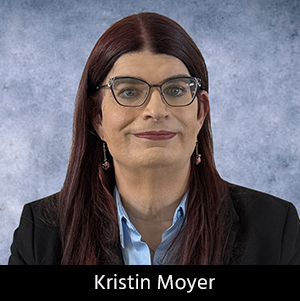
May 14, 2026 | Kristin Moyer, Global Electronics AssociationEstimated reading time: 2 minutes
The simple rectangular rigid PCB is becoming increasingly infrequent. This reality necessitates designing with concepts well outside traditional rigid PCB methodologies. For example, the designer of wearable electronics may need to implement conductive fibers integrated into the textile material. Heads-up displays, like those in VR/AR headsets and glasses, require transparent circuitry etched into the display glass. The process of designing without a rule book usually starts with something other than the traditional board design process.
In this process, the complete schematic is sent to the PCB layout tool. The first step is usually to define or import the mechanical board outline from the mechanical design engineer’s or the customer's specification. Next, you define the board stackup and place all the parts into the design, followed by routing and validation. Finally, you have documentation and manufacturing file generation.
In new designs, there are often several steps that differ from this traditional approach. First, when considering modern designs, it may be necessary to select specialty materials with properties that may not have been accounted for in the designs' electrical requirements. You may need to select materials for thermal, chemical, or mechanical needs. In the case of 3D-printed electronics, there is no reinforcement material (glass) like that used in a traditional PCB design.
In this case, conduct a physics study of the materials first, focusing on the conductive material, as printed conductive materials are typically not pure crystalline lattice metals like copper foil but instead are copper- or silver-impregnated inks or resins. This means that the conductivity of the material, while sufficient for electrical signal propagation, may not be as good as a pure conductor. This means that there may be a greater IR drop on a printed conductive path compared to a pure conductor path.
To continue reading this article from the April 2026 issue of I-Connect007 Magazine, click here.
Testimonial
"We’re proud to call I-Connect007 a trusted partner. Their innovative approach and industry insight made our podcast collaboration a success by connecting us with the right audience and delivering real results."
Julia McCaffrey - NCAB GroupSuggested Items
I-Connect007 Editor’s Choice: Five Must-Reads for the Week
05/15/2026 | Nolan Johnson, I-Connect007When you work in the news business, even in trade media, you can never really get that far away from it. We never want to miss something important. Chances are, even the books we take on our “vacations” end up having to do with the business. For example, my colleague Michelle Te recommended “Creativity, Inc., by Ed Catmull, a business skills study wrapped up in stories about Pixar, which I brought with me on a trip through the stunning U.S. Mountain West. Now, I’m back, and here are my recommendations for the week.
I-Connect007 Editor’s Choice: Five Must-Reads for the Week
05/08/2026 | Marcy LaRont, I-Connect007This week, I’ve selected some outstanding interviews that you’ll want to take note of. First, is a roundtable discussion featuring three dynamic industry cybersecurity experts. Please watch this important discussion that affects us all. Following that, I spotlight the IPC-2581 Consortium, which explains why IPC-2581 is the standard to replace Gerber data for manufacturing. Next, I am including my interview with PCBAA and AAM, who collaborated to release a short documentary on U.S. PCB manufacturing.
Nolan’s Notes: Our Spotlight on North America
05/05/2026 | Nolan Johnson -- Column: Nolan's NotesIn this issue of SMT007 Magazine, we wrap up our electronics world tour with a final stop in the United States and Canada, where we look at the challenges, opportunities, and geopolitical dynamics affecting the market today. What makes American electronics unique? Key U.S. administration policy decisions, like tariffs, are significantly affecting electronics manufacturing. Others, such as the current conflict with Iran and the associated closures of the Strait of Hormuz, affect the raw materials that feed our supply chain.
Volatile Metals Market Creates PCB Pricing Headache
04/20/2026 | Nolan Johnson, I-Connect007Market volatility for precious metals is very real. Financial organizations have reported elevated volatility, with record highs and steep corrections; in 2025 alone, gold has increased by over 60%, silver over 120%, and copper over 35%. Each is a critical raw material used in electronics manufacturing, where pricing is already fraught for business owners and their customers due to tariff uncertainty and a critical supply chain that resides mostly in China. The volatility of precious metals markets adds yet another layer of complexity for manufacturers, pushing up raw material costs.
SMTA Announces 2026 STAR Forum Technical Program
04/16/2026 | SMTAThe SMTA announced the finalized program for the High Reliability: Strategic Technology Advancement Research Forum which takes place on May 6-7, 2026 in Olathe, Kansas, USA.