













 Fresh PCB Concepts: IPC-6012 Class 3 and High-reliability PCB Manufacturing
 Elementary, Mr. Watson: The Display Revolution, Now With Fewer Tiny Keys
 Beyond Design: Skip-layer Routing—The Waveguide Structure That Makes 224G Possible





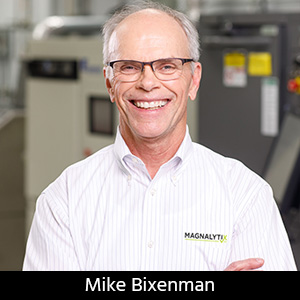
Mike Bixenman, president of Magnalytix, and his colleagues Vladimir Sitko, founder of PBT Works, and Adam Klett, PhD, director of science at KYZEN, discussed how cleaning can affect reliability, in a Professional Development Course at APEX EXPO 2026. We spoke to Mike after the session to better understand the context for the current activity in cleaning technology.
Nolan Johnson: Mike, what were the goals your team was trying to accomplish in this course?
Mike Bixenman: As electronics evolve, we're seeing smaller components and more density, and that means that the pitch distance between conductors of opposite polarity is getting narrower as well. Residues can accumulate underneath these components because they sit almost flush to the board. Often, these residues don't fully outgas or decompose the activators during the reflow process.
That said, the history of no-clean solder paste and flux packages has been an enormous success over the past 30 years. Although many designs were not cleaned, those that weren’t had larger, often lead-type components. Now we see more bottom-terminated components. Reduced spacing and low standoff heights make flux residues harder to remove and dramatically increase reliability risks.
No-clean flux technology can still cause electrical failures, moisture absorption, and long-term reliability issues. High-reliability sectors, including aerospace, defense, medical, automotive, IT, and industrial, often require cleaning even when using no-clean flux. Flux residues trap moisture, creating the perfect environment for ECM. Moisture dissolves ionic contamination and can wet between conductors. This allows metal ions to migrate under voltage bias. Dendrites grow between conductors, resulting in leakage currents and short circuits.
Johnson: That was loud and clear in the evidence you showed and the techniques you talked about: We used to clean all the time, then we had a period where no-clean was a viable option. Now it seems we're back to cleaning again, because features are so small that even the residues are a problem.
Bixenman: There are many different flux packages. As a result, the cleaning fluid designs are complex formulations, but they're really designed today to clean a broad range of flux packages. Engineering those materials is highly complex, but they must also meet environmental and material-compatibility requirements. So, as we think about this whole cleaning challenge, it's about selecting the right material, the right tool, and then understanding the different process conditions needed to achieve the total objective.
Johnson: It is true that there is a broad palette of solutions to choose from, formulated to do particular kinds of work. All three of you used language like, “Depending upon the situation, you might use this, or you might use that.” Is the chemistry involved in cleaning becoming more specific and focused, or can cleaning stay broad in focus?
Bixenman: The cleaning solution companies try to make their formulas both broad and specific. Where the specific side comes in is the type of cleaning tool that you're using. For example, if you're using a vapor degreaser, you can't use aqueous chemistry in that equipment. You need to use a chemistry that has high vapor pressure. If you're using a spray-in-air type tool, as Vladimir talked about, it has to be low-foaming. The chemistry also needs the ability to be rinsed completely from the substrate once you've washed it.
When we look at cleaning electronics, aqueous is probably 90% or more of the market, so the key producers designing those aqueous chemistries are designing those materials to clean across a broad array of flux types, compatible with a broad array of cleaning machines, whether inline or batch. A lot of these cleaning agents are microphase, meaning there is a solvent phase and an aqueous phase, so you have to keep them mixed and under control.
People in the cleaning business understand all aspects of the process. They've got it down to a science. But on the testing side, we're really trying to validate that your process is working. When we look at testing, don't look at failure as, “That's the end of the world.” There's always a reason for failure. If you structure your test plan correctly, you can identify the weak spots and correct them. It can be quite valuable for a contract manufacturer to have that test certificate for their cleaning processes. They can use that certification with their OEMs to get more contracts. But in the end, if they're going to spend that money to clean, they should ensure it’s done well. Then they're building a more reliable product for their customers.
This is what our course was addressing. When we look at the whole concept of what we tried to do with no-clean, there's a problem when we move to higher density and smaller gaps. Residues are becoming a problem, making cleaning a requirement. How do we select the proper cleaning material and the proper cleaning tool so that we can achieve exceptional cleanliness and control the process? At the end of the day, it is about validating that process.
Johnson: Excellent. Mike, thank you so much. I appreciate this.
Bixenman: You're welcome.


