
















 Elementary, Mr. Watson: Waking Up Europe's PCB Giants
 Connect the Dots: Getting the PCB Quote Right
 Powering the Future: What Engineers Get Wrong About Designing for Reliability





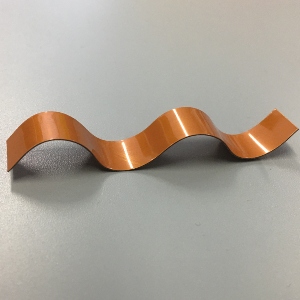
Sumitomo Electric Industries, Ltd. has succeeded in mass production of FLUOROCUIT ™ , fluororesin-based flexible printed circuits (FPCs) that demonstrate a high flexibility and low transmission loss in the millimeter-wave band, aiming at communications for 5G and beyond. In wireless communication, 5G mobile communication has started to be used on a commercial basis.
Currently, the sub-6 band (such as 3.5 and 4.7 GHz) is being used for 5G communication in various parts of the world. To increase the transmission speed, it is expected that the frequency used will be increased to the millimeter-wave band (such as 26 GHz and 28 GHz).
Furthermore, even higher frequencies in the millimeter-wave band will be used on a full scale, with the launch of 6G mobile communication and the practical use of radars and sensors in mind.
Against this backdrop, Sumitomo Electric has achieved mass production of flexible fluororesin-based FPCs, which are characterized by a low transmission loss in the millimeter-wave band.
Fluororesins are characterized by low permittivity and dielectric dissipation factor compared to those of liquid crystal polymers (LCPs), which have started to be used for high-frequency circuits, thereby making it possible to further reduce the transmission loss (approximately 40% in the 40 GHz band). The higher the frequency, the more markedly the characteristics are demonstrated. Due to these characteristics, fluororesins have attracted much attention as circuit materials with excellent characteristics in the high-frequency band.
The Sumitomo Electric Group has long been engaged in fluororesin processing and has developed various products. By harnessing its accumulated expertise and technology, Sumitomo Electric has achieved mass production of fluororesin-based FPCs, whose Sumitomo Electric Succeeds in Mass Production of FLUOROCUIT TM , Fluororesin-based Flexible Printed Circuits That Demonstrate Excellent Transmission Characteristics in the Millimeter-Wave Band Comparison of transmission loss with liquid crystal polymer (an FPC manufactured by Sumitomo Electric) 2/2 processing was considered to be difficult. The fluororesin-based FPCs are as flexible as conventional FPCs and therefore are suited to wiring in areas where flexibility is required, such as curved surfaces.
By taking full advantage of these characteristics, the fluororesin-based FPCs are expected to find widespread applications. While used as writing materials in data centers, 5G base stations and terminal devices, they can also be employed as antennas for these stations and devices. Radar devices and sensors are also expected to be possible application targets of the fluororesin-based FPCs.


