











 It’s Only Common Sense: How to Demonstrate Grace Under Pressure During Tough Times
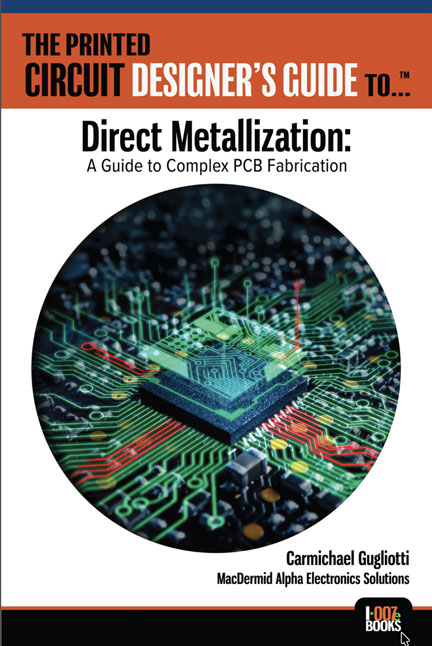
 Trouble in Your Tank: Pre-electroless Causes of Voids
 Punching Out: Preparing Your PCB/EMS Business for Sale





AGY, a leading manufacturer of advanced specialty glass fibers, today announced a strategic partnership with JPS Composite Materials LLC to manufacture and produce the first North American-based low coefficient of thermal expansion (Low CTE) glass fiber fabric designed specifically for advanced integrated circuit (IC) substrates and next-generation semiconductor packaging technologies.
This collaboration combines AGY’s proprietary L-HDI™ ultra-low CTE glass fiber, produced at its Aiken, South Carolina manufacturing facility, with JPS Composite Materials’ advanced weaving and fabric production capabilities at its Statesville, North Carolina facility. Together, the companies are establishing a fully domestic supply chain for critical reinforcement materials used in high-performance semiconductor applications.
Low CTE glass fiber fabric plays a vital role in IC substrate performance by enhancing dimensional stability, reducing warpage, and supporting higher interconnect density. These characteristics are essential for advanced packaging platforms such as Chip-on-Wafer-on-Substrate (CoWoS) and System-on-Integrated-Chips (SoIC), which enable higher bandwidth, improved power efficiency, and greater functional integration in AI, data center, and high-performance computing applications.
“Establishing a North American source for Low CTE glass fiber fabric is a major milestone for the semiconductor supply chain,” said Patrick Hunter, Chief Commercial Officer and President of AGY. “Our L-HDI glass fiber platform was developed to meet the increasing dimensional stability and dielectric performance demands of next-generation IC substrates. By partnering with JPS Composite Materials LLC, we are delivering a fully domestic solution that strengthens supply chain resiliency while supporting leading-edge packaging innovation.”
AGY’s L-HDI glass fiber is engineered to provide ultra-low CTE, excellent dielectric properties, and consistent filament geometry required for advanced electronic laminates and substrates. JPS Composite Materials LLC brings decades of experience in precision weaving and high-performance fabric manufacturing, ensuring tight construction control and quality standards necessary for semiconductor-grade fabric.
“This partnership positions both companies at the forefront of advanced electronics materials manufacturing in the United States,” said Keith Bendyk, President, JPS Composite Materials. “By combining AGY’s specialty fiber technology with JPS’s fabric expertise, we are enabling domestic production of a material that is critical to AI infrastructure and advanced semiconductor packaging.”
The AGY and JPS collaboration support broader U.S. initiatives to localize critical semiconductor materials, enhance supply chain security, and advance domestic manufacturing capabilities in support of AI, aerospace, defense, and high-performance computing markets.
Initial production is underway, with customer qualifications in progress.