












 The Marketing Minute: If Your Marketing Budget Gets Cut in Half, Then What?
 Punching Out: How Are the Big Boys in Electronics Doing?
 It’s Only Common Sense: Complexity Is the Enemy of Profit





Enhancing Reliability in Harsh Environments
November 18, 2025 | Real Time with...SMTAIEstimated reading time: 4 minutes
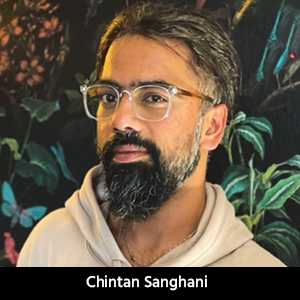
SLB is a leading technology OEM in the energy sector, providing technology, equipment, and services to support oil exploration, drilling, production, and processing. This is big business, and the technology can be complex. Chintan Sanghani—a new voice in SMT007 Magazine—is SLB’s expert in quality and process improvement, and I had the opportunity to meet him while in Chicago in October.
An authority in Lean, Chintan emphasizes the importance of simulations in predicting various failure modes that can arise from harsh conditions, noting that this proactive approach enables continuous improvement in reliability. He describes SLB as a technology company that leverages physics to enhance the performance of its products and that emphasizes reliability in its designs. Electronics manufacturing can learn a lot from SLB’s approach, adapting what we can to suit our specific manufacturing environments and product applications.
Marcy LaRont: Chintan, it is nice to meet you in person. Tell us a little bit about yourself.
Chintan Sanghani: I lead process and quality for SLB’s electronics center in Houston. We've been making printed circuit board assemblies that go down a hole, diving into an environment that is 200ºC, subject to 30,000 PSI pressure, and 500 g of shock.
We want these tools to report information back to us reliably for a long time. At some point, we will encounter failures. The challenge is: How do we design our materials and select our overall profiles to ensure they can withstand these conditions over a long period?
LaRont: We've been talking about simulation as a proactive approach to quality and reliability. Tell me about your simulation work.
Sanghani: It’s worth asking why we simulate in the first place. It's primarily due to extreme temperatures, which accelerate all reactions. We know that we will have different failure modes. Intermetallics will grow as temperature increases, for example. Voids will form, and fatigue builds. Then, we put these electronics in metal encasements. Those metals will creep and age. As they age, they become tired. That's why it's so important for us to simulate these things and bring these failures to the surface; reliability is not just a milestone or a mission for us. It’s a responsibility to our customers, our industry, and to the people who depend on what we build.
We simulate failures by performing extensive thermal cycling, CT mismatches, testing the function of thermal expansion, and aging, to induce these failures. From there, we can discover mitigation strategies for each failure mode and incorporate them back into the design, creating a closed-loop system for continuous improvement and higher product reliability.
That's our continuous improvement aspect. To summarize, we say, “Reliability is empathy for materials.”
LaRont: Reliability is certainly the biggest quality issue on everyone's lips.
Sanghani: When it comes to reliability, it is important to understand that very high temperatures make achieving reliability far more difficult. We view ourselves as a technology company rather than one focused solely on subsurface excellence, which, of course, we do.
The value we bring to the industry lies in the quality of data our technology gathers, and, more importantly, in how we use that data to continuously improve reliability and performance. We don’t sell raw data; we deliver digital intelligence that captures, connects, and transforms decision-making at speed. With more than a century of domain expertise, we bring that knowledge directly to our customers’ fingertips.
This digital transformation is essential for U.S. energy independence and competitiveness. It addresses two major challenges: balancing the growing demand from AI and data centers with the urgent need for cleaner energy. We tackle these challenges head-on by advancing geothermal and other sustainable solutions that provide constant, reliable power. Our sensors and analytics systems help customers monitor performance, predict failures, and enhance reliability in real time—making data not just useful, but transformative.
LaRont: Chintan, what is your involvement in the Global Electronics Association and iNEMI, and how does it relate to your work on reliability?
Sanghani: I’m on several standards development committees within the Global Electronics Association and am also involved with iNEMI. For example, we are focusing on the roadmap for advanced packaging and reliability. We always work with an industry consortium.
Especially in oil and gas energy, our tools and designs have been the same for years and redesigning is not that easy.
LaRont: I assume oil and gas is a little bit like defense primes where there is not a lot of change because the reliability is so important.
Sanghani: Yes, change can be cost-prohibitive, so, how can we make the technologies and equipment we have survive for as long as possible?
Then, we also work with modern electronics that are pushing all known limits. We require extensive collaboration with various industries and partnerships with different suppliers to co-develop solutions. iNEMI serves as a playground for us to do that. We also want to collaborate more and more with SMTA in this area.
With the Global Electronics Association, IPC standards work is very important. Class 3 does not adequately cover reliability in harsh environments. Those failure modes might be okay in other industries but in harsh environments, those electronics will not survive. We work with them to ensure they understand and establish a better standard. We work very closely with the Association to define what those things need to be.
Industry collaboration is crucial in addressing some of our greatest challenges in electronics and manufacturing, and to enable the ability to consistently build high-quality, reliable products.
LaRont: Chintan, it was nice to have met you in person. Thank you for taking the time to speak with me.
Sanghani: Thank you, Marcy, my pleasure.
Share on:



Subscribe
Stay ahead of the technologies shaping the future of electronics with our latest newsletter, Advanced Electronics Packaging Digest. Get expert insights on advanced packaging, materials, and system-level innovation, delivered straight to your inbox.
Subscribe now to stay informed, competitive, and connected.
Suggested Items
RBB Earns AS9100 Certification, Expands Aerospace and Defense Credentials
05/15/2026 | RBBRBB, a trusted leader in electronics manufacturing since 1973, has achieved AS9100 certification, meeting the stringent quality, traceability, and risk management standards required in aerospace and defense industries.
MacDermid Alpha to Address Silver Price Volatility Solutions at ECTC 2026
05/15/2026 | MacDermid AlphaAs volatile silver prices continue to place pressure on semiconductor packaging costs and supply chain predictability, MacDermid Alpha Electronics Solutions will highlight material strategies that help manufacturers reduce dependence on silver without sacrificing reliability, thermal performance, or manufacturing efficiency.
Absolute EMS Expands Support for LEO, MEO, and GEO Satellite Programs
05/13/2026 | Absolute EMS, Inc.Absolute EMS, Inc., a Silicon Valley–based provider of high-technology electronics manufacturing services, continues to grow its presence in the satellite sector, supporting programs across low Earth orbit (LEO), medium Earth orbit (MEO), and geostationary orbit (GEO) with advanced PCBA manufacturing, test, and sub-assembly capabilities.
Road to Reliability: Engineering High Uptime EV Charging Infrastructure
05/13/2026 | Stanton Rak, SF Rak CompanyThe transition to EVs is no longer constrained solely by vehicle capability. Instead, it is increasingly defined by a simpler, but more unforgiving question: Will the charger work when I arrive? This high uptime does not happen by accident. As EV technology has matured, limitations in battery range, power electronics, and thermal management are no longer the primary barriers to adoption.
Indium to Showcase High-Performance AI Application Solutions at SEMICON SEA 2026
05/01/2026 | Indium CorporationAs a leading provider of advanced materials solutions for today’s demanding AI applications, Indium Corporation® will feature its high-reliability product portfolio at SEMICON SEA 2026, May 5-7, in Kuala Lumpur, Malaysia.