








 It’s Only Common Sense: Win the Sale Before the RFQ Arrives
 The Marketing Minute: Marketing Is a Team Sport





Latest Articles
I-Connect007 Editor’s Choice: Five Must-Reads for the Week

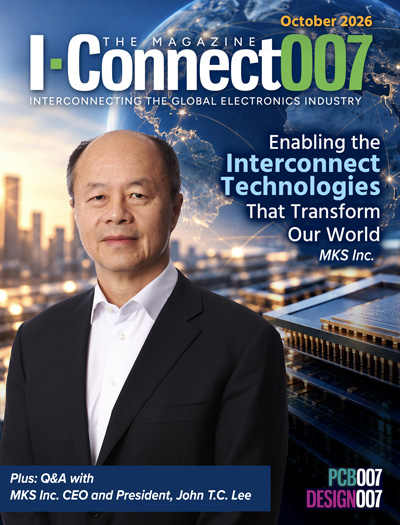
In my top five must-read items from this week’s articles and news, I am focusing on the interconnect because, honestly, who isn’t? We are in the interconnect business, and it just gets more complex and more fun every day. My interview with MKS Inc.’s Dr. John Lee and the accompanying article, which breaks down the technology, implications of current market realities, and their effect on the state of “the interconnect,” is my first choice this week.
ICT 2026 Annual Symposium Review (Part 2): Solving Complex Manufacturing Challenges

A logical follow-on from the discussion of AI infrastructure was a practical example of AI applications in a PCB manufacturing environment. Oliver Cleveley-Jones and his colleagues Patrick Brown and Sam Hair from Alpha Machines described the development and benefits of an AI-driven integrated digital-twin architecture, and what it looks like from the inside of a working factory.
ICT 2026 Annual Symposium Review (Part 1): What Lies Ahead?
It was a misty autumn morning on the outskirts of Coventry in the Midlands of England for the 2026 Annual Symposium of the Institute of Circuit Technology. ICT technical director Alun Morgan welcomed delegates and remarked upon the excellent attendance. Although there were plenty of familiar faces in the audience, an encouraging number of hands were raised when Morgan enquired who was there for the first time. Remarking that although the Institute had seen a lot of changes since it was founded in the 1970s, the time for reminiscing was in the bar and the purpose of the symposium was to talk about the future, hear some new ideas, and discuss where we were going as an industry.
From IPC Standards to Practical DFM

DFM seems like common sense: If we know the rules a PCB must meet, why not check the design against them before it ever reaches the factory? In practice, of course, it’s not quite that simple. I caught up with Susan Kayesar, product manager at Siemens and longtime contributor to Global Electronics Association standards activities, to talk about an ongoing effort between Siemens and the Association to translate IPC requirements into practical, software-based DFM checks.
Optimizing the Interconnect with Dr. John T.C. Lee
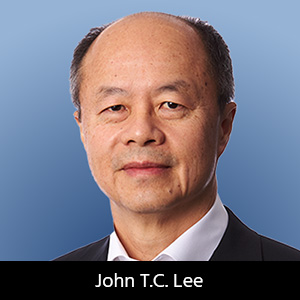
When Dr. John T.C. Lee talks about the evolution of electronics, he keeps coming back to the interconnect. As CEO and President of MKS Inc., he saw growing complexity in the connections between increasingly powerful devices as both a manufacturing challenge and a business opportunity. That thinking helped drive MKS’ acquisition of Atotech in 2022, bringing process chemistry and electroplating together with MKS’ existing strengths in lasers, optics, and precision motion, and giving substance to a strategy the company calls Optimize the Interconnect™.
Stop Inspecting AI and Start Understanding

If you are new to a PCB shop, there is a good chance your first real job is at the back end of the line. Maybe you run the AOI station or pull boards at final inspection and flag the ones that do not pass. I want you to notice something: Every board you reject has already been built. The copper was plated and the layers pressed before you ever saw it. Your job is to catch the mistake, not to stop it from happening. That is a problem, but not with you. Unfortunately, it has always been the way most shops go about achieving quality.
Enabling the Interconnect Technologies That Transform Our World: MKS’ Strategic Role in Powering the Future of AI and HPC
AI is reshaping industries, economies, and daily life at an unprecedented speed. From generative AI and autonomous systems to high-performance computing (HPC) applications in science, defense, and advanced manufacturing, the demand for computational power is accelerating exponentially. But while algorithms capture the spotlight, the true enabler of this transformation lies deeper, in the physical infrastructure that makes AI possible. Performance in the AI era is no longer defined by transistor shrink alone. It is increasingly defined by how efficient systems are integrated, interconnected, cooled, and manufactured at scale.
Who Will Replace Electronics Manufacturing’s Most Experienced Workers?

The electronics manufacturing industry has spent years discussing technological advancement, expanding domestic production, and developing the next generation of manufacturing capabilities. But behind those conversations is another challenge that deserves attention: Who will replace the industry’s most experienced workers as they approach retirement? Recent research from the U.S. Census Bureau illustrates the scale of the issue. In 2022, 52.1% of workers in electronic component and product manufacturing were age 45 or older.
The Need for Speed in Mil/Aero Manufacturing

Military and aerospace manufacturers are being asked to move faster, whether developing new drone technologies, responding to supply constraints, or getting new designs from prototype to production. James Hofer of Accurate Circuit Engineering sees that pressure as changing more than just manufacturing schedules. He talks about the growing role of quick-turn PCB fabrication, new relationships between defense primes and startups, and why even long-established approaches to standards and manufacturing have to become more adaptable.
I-Connect007 Editor’s Choice: Five Must-Reads for the Week
Working from home really has its perks, especially when it comes to driving. I don’t miss the commute time, driving in the rain, or having to maneuver around everyone else going to work or coming home. Simply popping up to my desk in the morning is such a benefit. But what I do miss is being physically with my coworkers and the interactions that can happen when you’re all together. You just don’t get the synergy over a Teams call that you can get in person. Even more, being together fosters a sense of camaraderie you can’t get any other way.
The Good News in the PCB Market Outlook

There’s plenty of good news in the PCB market right now, but Dr. Hayao Nakahara cautions against taking the growth numbers entirely at face value. Higher prices for memory and scarce materials are helping drive some impressive financial results, even as order volumes tell a somewhat different story. At the same time, AI servers and advanced packaging are creating opportunities that could reshape where PCB manufacturers invest next.
From Substrates to Systems: A Preview of the October Advanced Electronics Packaging Digest

The October issue of Advanced Electronics Packaging Digest examines the technologies, investments, and strategic decisions shaping the future of advanced electronics manufacturing. From the evolution of semiconductor scaling and the integration challenges of high-frequency systems to the expansion of semiconductor capabilities in the United States and India, this issue explores how materials, packaging architectures, and manufacturing infrastructure are becoming interconnected.
I-Connect007 Welcomes Michael Gleason as New Columnist

I-Connect007 welcomes Michael Gleason, director of product development and strategic growth at GreenSource Fabrication, as its newest columnist. His monthly column, Built for What’s Next, will appear in I-Connect007 Magazine, offering a forward-looking perspective on PCB design, advanced manufacturing, and the technologies shaping the next generation of electronics. With more than 20 years of experience in PCB manufacturing, Gleason brings a combination of engineering expertise, operational leadership, and practical knowledge of advanced fabrication.
I-Connect007 Releases Episode 3 of Qnity Podcast Series, Engineering What’s Next

I-Connect007 is pleased to announce the release of the third episode of Engineering What’s Next, a six-part On the Line With… Qnity podcast series exploring the materials, technologies, and engineering challenges shaping the future of electronics. In this episode, “Rethinking PCB Design for AI Data Centers,” host Marcy LaRont speaks with Dr. Jin Hyun Hwang, business development specialist at Qnity, about how the extraordinary performance and power demands of artificial intelligence are changing the way engineers approach PCB design, materials, packaging, and system architecture.
I-Connect007 Launches Voices of the Industry Podcast Featuring NCAB Group’s Kelly Davidson

I-Connect007 is pleased to announce the release of a new episode of Voices of the Industry, featuring Kelly Davidson, the new president of North American operations for NCAB Group. The PCB industry is navigating significant change, from economic uncertainty and shifting global supply chains to evolving customer demands and increasingly complex technology requirements. Amid these shifts, Davidson stepped into her new leadership role in December of 2025.
I-Connect007 Welcomes Newest Columnist, Echo Yang of Archer Circuits

I-Connect007 is excited to welcome Echo Yang, founder and president of Archer Circuits, as its newest columnist. As a female owner of a large Asian PCB company, Echo brings her candid, energetic, and practical view of the global PCB business to her column, The Fearless Connector. She will address the differences between Chinese and North American manufacturing, her own struggles to start a business, and some details about DFM, engineering, Gerber files, and the risks of treating RF, rigid-flex, and other demanding products like ordinary FR-4 work. She approaches it all with her own youthful, entrepreneurial spirit.
What Climate Week NYC Conversations Mean for the Electronics Industry
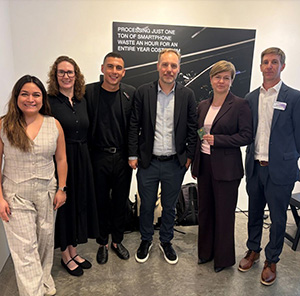
Climate Week NYC brought together plenty of big ideas, but the conversations that stayed with us were grounded in everyday business realities. Companies are thinking about sustainability in terms of what it means for their ability to manage risk, keep costs in check, secure materials and energy, and remain competitive. That is particularly relevant for electronics. Our industry relies on global supply chains, specialized materials, dependable infrastructure, and skilled people. As demand for AI, computing capacity, and new technologies grows, so does the pressure on all those systems.
I-Connect007 Editor’s Choice: Five Must-Reads for the Week
Have you ridden in a robotaxi yet? Increasingly, there are sightings in some of the major cities here in the western U.S, particularly San Francisco. This past week, we published a news item from Berg Research projecting that robotaxis will grow from 6,500 deployments today to more than 1.5 million over the next 10 years. The technology for fully autonomous vehicles continues to look like an emerging tech driver for the EV sector.
PCB West Keeps the Momentum Going

The weather couldn’t have been nicer for PCB West 2026 last week at the Santa Clara Convention Center in California. As soon as I walked into the conference on Tuesday afternoon, I saw old friends and colleagues. The energy was high and overwhelmingly positive during the four-day event, which featured 70 technical sessions and events, including 10 free sessions on Wednesday, the day of the Expo.
Advanced and Conventional PCBs Do Not Exist in Separate Supply Chains

At the NCAB Norway seminar on Sept. 10, I used a familiar example: a standard six-layer PCB. A year earlier, this would generally have been a straightforward purchase. Prototypes could be supplied on quick turn, and production quantities were commonly available within four to six weeks. Choosing standard materials helped secure a competitive price and predictable delivery. We knew what to expect, and we planned accordingly. We were all happy!
SCHMID Pushes Toward the Submicron

Fabricators are confronting process requirements today that would have seemed foreign to the PCB shop not long ago, presenting both a promise and a significant manufacturing challenge. SCHMID is one company rising to it in big ways. SCHMID's Laurent Nicolet, VP for the Business Unit PCB, talks about the convergence between PCB fabrication and semiconductor processing as feature sizes shrink, the emergence of glass as an attractive substrate and interposer material, and SCHMID’S embedded trace technology and the work toward moving that technology into high-volume manufacturing.
I-Connect007 Editor’s Choice: Five Must-Reads for the Week
This week, I was fortunate to attend PCB West in Santa Clara, California, and was reminded of the idyllic weather of that part of California in the early fall. Attendance was high at the weeklong conference and one-day expo, allowing the show to maintain its place as one of the best events for PCB and PCB design. As always, it was great to see old friends and familiar faces. Stay tuned for more PCB West coverage.
I-Connect007 Expands Technical Library With New Companion Guide to The Printed Circuit Assembler’s Guide to… Factory Analytics

I-Connect007 is pleased to announce the release of Factory Analytics on the Floor: How Connected Data Drives Better Decisions, a new companion guide to The Printed Circuit Assembler’s Guide to… Factory Analytics: Unlocking Efficiency Through Data Insights, by Cogiscan. Designed to bring factory analytics into a practical, real-world setting, the guide follows a day on the factory floor as operators and engineers go beyond basic KPIs to connect machine data, inspection results, process conditions, and human expertise. Together, these insights provide a clearer picture of what’s happening in production and where improvements can have the greatest impact.
3 Key Takeaways: Making ENIG and ENEPIG More Sustainable
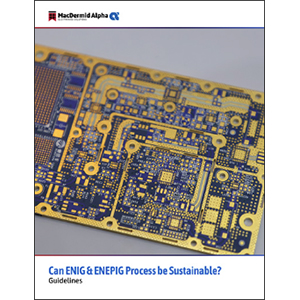
Gold prices have risen dramatically over the past decade, putting additional pressure on PCB fabricators to control costs without compromising the finishes their customers require. For ENIG and ENEPIG processes, however, the opportunity to reduce costs may also present an opportunity to improve sustainability. In its white paper, “Can ENIG & ENEPIG Process be Sustainable?” MacDermid Alpha Electronics Solutions provides guidelines for where the greatest opportunities exist to reduce gold consumption, chemistry use, energy demand, and waste while continuing to meet established performance requirements.
Real Time with... THECA 2026: DTECH Advances PCB Drilling for AI and High-Speed Systems
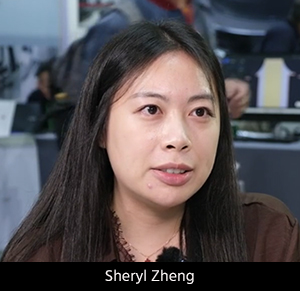
Sheryl Zheng, marketing manager at DTECH, discusses how AI and high-speed communications are reshaping PCB drilling requirements. She explains DTECH's evolution from a PCB tool specialist into a broader solutions provider and why drill-bit performance is becoming a more critical element of producing advanced, high-quality circuit boards.
Copyright © I-Connect007 | IPC Publishing Group Inc. All rights reserved.
Log in