


















 Dan’s Biz Bookshelf: ‘Abundance: How We Build a Better Future’
 Trouble in Your Tank: In Complex Systems, Design Rules Aren’t Optional
 It’s Only Common Sense: The Phone Is Still Your Competitive Advantage





Scientists Suggest a 100 Times Faster Type of Memory Cell
March 16, 2016 | Moscow Institute of Physics and TechnologyEstimated reading time: 3 minutes
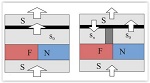
A group of scientists from Moscow Institute of Physics and Technology and from the Moscow State University has developed a fundamentally new type of memory cell based on superconductors - this type of memory will be able to work hundreds of times faster than the types of memory devices commonly used today, according to an article published in the journal Applied Physics Letters.
"With the operational function that we have proposed in these memory cells, there will be no need for time-consuming magnetization and demagnetization processes. This means that read and write operations will take only a few hundred picoseconds, depending on the materials and the geometry of the particular system, while conventional methods take hundreds or thousands of times longer than this," said the corresponding author of the study, Alexander Golubov, the Head of MIPT's Laboratory of Quantum Topological Phenomena in Superconducting Systems.
Golubov and his colleagues have proposed creating basic memory cells based on quantum effects in "sandwiches" of a superconductor - dielectric (or other insulating material) - superconductor, which were predicted in the 1960s by the British physicist Brian Josephson. The electrons in these "sandwiches" (they are called "Josephson junctions") are able to tunnel from one layer of a superconductor to another, passing through the dielectric like balls passing through a perforated wall.
Today, Josephson junctions are used both in quantum devices and conventional devices. For example, superconducting qubits are used to build the D-wave quantum system, which is capable of finding the minima of complex functions using the quantum annealing algorithm. There are also ultra-fast analogue-to-digital converters, devices to detect consecutive events, and other systems that do not require fast access to large amounts of memory. There have also been attempts to use the Josephson Effect to create ordinary processors. An experimental processor of this type was created in Japan in the late 1980s. In 2014, the research agency IAPRA resumed its attempts to create a prototype of a superconducting computer.
Josephson junctions with ferromagnets used as the middle of the "sandwich" are currently of greatest practical interest. In memory elements that are based on ferromagnets the information is encoded in the direction of the magnetic field vector in the ferromagnet. However, there are two fundamental flaws with this process: firstly, the low density of the "packaging" of the memory elements - additional chains need to be added to provide extra charge for the cells when reading or writing data, and secondly the magnetization vector cannot be changed quickly, which limits the writing speed.
The group of physicists from MIPT and MSU proposed encoding the data in Josephson cells in the value of the superconducting current. By studying the superconductor-normal metal/ferromagnet-superconductor-insulator-superconductor junctions, the scientists discovered that in certain longitudinal and transverse dimensions the layers of the system may have two energy minima, meaning they are in one of two different states. These two minima can be used to record data - zeros and ones.
In order to switch the system from "zero" to "one" and back again, the scientists have suggested using injection currents flowing through one of the layers of the superconductor. They propose to read the status using the current that flows through the whole structure. These operations can be performed hundreds of times faster than measuring the magnetization or magnetization reversal of a ferromagnet.
"In addition, our method requires only one ferromagnetic layer, which means that it can be adapted to so-called single flux quantum logic circuits, and this means that there will be no need to create an entirely new architecture for a processor. A computer based on single flux quantum logic can have a clock speed of hundreds of gigahertz, and its power consumption will be dozens of times lower," said Golubov.
Share on:


Testimonial
"We’re proud to call I-Connect007 a trusted partner. Their innovative approach and industry insight made our podcast collaboration a success by connecting us with the right audience and delivering real results."
Julia McCaffrey - NCAB GroupSuggested Items
Northrop Grumman Advances Improved Threat Detection System for US Army
05/07/2026 | Northrop GrummanNorthrop Grumman Corporation was awarded a U.S. Army contract for second phase development of its Improved Threat Detection System (ITDS).
Renesas Completes Acquisition of Irida Labs
05/07/2026 | RenesasRenesas Electronics Corporation, a premier supplier of advanced semiconductor solutions, announced that a subsidiary of Renesas has completed the acquisition of Irida Labs, a Greece-based company specializing in embedded software for AI-powered visual perception systems.
More Than Electrical Test: TTCI to Spotlight X-ray and CT Capabilities at SMTA Capital Expo
05/07/2026 | TTCIThe Training Connection LLC (TTC-LLC) will exhibit at the SMTA Capital Expo on Thursday, May 14 at the DoubleTree by Hilton Baltimore - BWI Airport.
Green Circuits Heads to Peterson SFB to Support Next-Gen Space and Defense Electronics
05/05/2026 | Green CircuitsThe event, hosted at Peterson Space Force Base, brings together key personnel and mission partners supporting critical U.S. defense and space operations.
ANELLO Photonics Raises $25M to Scale GPS-Denied Navigation Solutions
05/04/2026 | PRNewswireANELLO Photonics, the creator of the Silicon Photonics Optical Gyroscope (SiPhOG) and a leader in solid-state, high-precision inertial navigation systems, today announced it has secured an additional $25 million in a Series B-2 financing round.