








 It’s Only Common Sense: When the Cheapest Board Becomes the Most Expensive
 The Chemical Connection: Employee and Operator Empowerment in the Age of AI
 The Big Picture: Not One, But Three Grey Rhinos



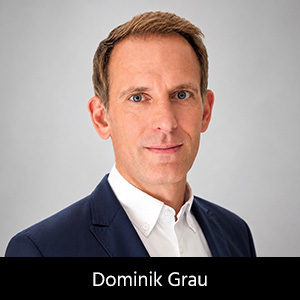
Europe’s electronics industry is navigating major shifts, from AI and automation to workforce challenges, sustainability, and evolving industrial policy. As the Global Electronics Association’s new vice president for Europe, Dominik Grau wants to understand what companies across the region need, and how the Association can help deliver it. In this interview, Dominik shares what he’s hearing directly from European electronics companies, why smart standards will become increasingly important in an AI-driven industry, and where he sees opportunities to bring together technology, workforce development, and the resources companies need to compete.
Marcy LaRont: Dominik, congratulations on your new role with the Association. Can you share a couple of highlights from your background?
Dominik Grau: For the past seven years, I've been working on standards, AI, business development, and the digital future for the German Institute of Standards (DIN), a close partner of the Global Electronics Association. DIN Media, where I was the managing director, sells IPC standards in Germany.
LaRont: How did you become aware of this new role with the Global Electronics Association?
Grau: A friend of mine said, "Look at this job opening. It sounds like you." I didn't have that on my radar, but I knew of the Global Electronics Association as I've been working with electronics companies up and down the supply chain as part of my smart standards efforts at ISO, CEN, and DIN. It seemed a natural fit.
LaRont: Have you always worked in electronics and manufacturing?
Grau: I've been involved with the electronics industry since I started working for a computer magazine called Chip about 25 years ago. Eventually, I joined the German subsidiary of the parent company of Computerworld and PC World, International Data Group (IDG), which was based in Boston. I'm a trained journalist and business economist who started working as an editor and business developer. I moved into online and digital businesses, and then eventually into general management. As a managing director, I worked at tech, media, and standards companies in Europe and the U.S.
LaRont: I was actually the reverse, where I started in manufacturing and found my way into publishing. It is interesting to look at where we start and where we end up.
Grau: I was a global publisher for a media company based in Manhattan, so I’ve had a strong network in the United States, which makes this role with the Global Electronics Association, with its headquarters in Chicago, a natural fit.
LaRont: Dominik, tell me about your standards work in Germany.
Grau: I was brought on board by the German management of DIN, the Deutsches Institut für Normung (the German Institute for Standardization), for two main projects.
One project was to rebuild the company from a traditional standards publisher into a software business for standards, serving German corporations and SMEs. My role was to rethink the way standards were being provided to industry there. I joined DIN Media as a managing director in 2019, and I said to myself, "They've been selling print standards for almost a century, and about 25 years as PDFs. It's time for something different. The industry has changed. They expect us to deliver it in a way that's more natural to what they're doing in terms of automation, digitalization, and later also robotics that are now just around the corner, in other words, all things smart standards.”
Continue reading this article in the September 2026 issue of I-Connect007 Magazine.


