










 It’s Only Common Sense: Win the Sale Before the RFQ Arrives
 The Marketing Minute: Marketing Is a Team Sport





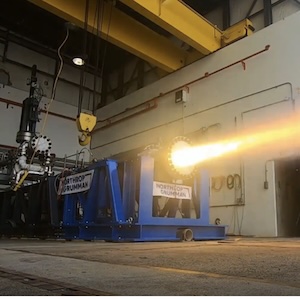
To address the evolving challenges of detecting and defeating unmanned aerial systems at extended ranges, Northrop Grumman will develop next-generation air-breathing propulsion for the U.S. Army, significantly enhancing the range and air defense capabilities of the Army's eXtended Range Counter-Unmanned Aircraft System (XRC).
A leader in air-breathing tactical propulsion, Northrop Grumman will develop and integrate solid fuel ramjet propulsion technology for integration into XRC missile prototypes under this $18.8 million contract with the U.S. Army Combat Capabilities Development Command Aviation & Missile Center. Unlike solid rocket motors, which utilize propellant containing fuel and a chemical oxidizer, solid fuel ramjets use atmospheric oxygen as the oxidizer for the fuel during flight, freeing internal volume for additional fuel. The result is a more efficient propulsion system that delivers greater range and energy, enabling engagement of highly maneuverable aerial threats at safer distances from protected forces.
The development will include a comprehensive ground and flight test campaign to validate the design and production processes. The resulting design will support scalable, cost-effective manufacturing to meet urgent defense requirements quickly.
Expert:
Erik Buice, vice president, missile products, Northrop Grumman: “The rapid evolution of unmanned aerial threats demands innovative solutions. By aligning the Army's vision for next-generation air defense with our advanced propulsion expertise, we're delivering capability that engages targets farther away, protects mobile forces and strengthens layered defense against emerging aerial threats.”
Details:
Development for the XRC program will be conducted at Allegany Ballistics Laboratory in West Virginia, a premier Northrop Grumman-operated facility specializing in advanced propulsion systems and energetics.
The XRC program focuses on enhancing the performance of the Army’s Maneuver Short Range Air Defense (M-SHORAD) system — designed to protect maneuvering forces from low-altitude aerial threats. Additionally, the system’s compatibility with the Stinger Vehicle Universal Launcher improves defense against advanced unmanned aerial systems as well as traditional fixed-wing and rotary-wing aircraft.
With adversaries increasingly deploying sophisticated unmanned systems, the XRC program’s extended-range capabilities is a vital element within the Army’s layered air defense strategy. Northrop Grumman’s deep involvement in the Army’s broader counter-UAS ecosystem also includes providing the foundational command-and-control network, kinetic options and propulsion expertise leveraged by advanced interceptor systems.
As prime contractor for the Forward Area Air Defense Command and Control (FAAD C2) system — the Army’s official short-range air defense program of record — Northrop Grumman plays an essential role in modernizing U.S. Army air defense. Additionally, the company’s AI-driven AiON command system supports managing multiple sensors and engaging mass drone swarms, enhancing the tactical response to these emerging threats.
Northrop Grumman is also advancing Raid Hunter™, the 50mm Gun-Based Air Defense system delivering a cost-effective, high-engagement-capacity solution designed to defeat mass, mixed air raids and enhance protection of maneuver forces and critical infrastructure within a layered CUAS defense framework.
Northrop Grumman remains committed to pioneering advanced technologies that keep warfighters safe and preserve mission success through scalable, integrated and highly effective defense solutions.