










 The Big Picture: Not One, But Three Grey Rhinos
 It’s Only Common Sense: Make Your ‘Account’ the Whole Organization
 Dan’s Biz Bookshelf: ‘Building a Story Brand 2.0’



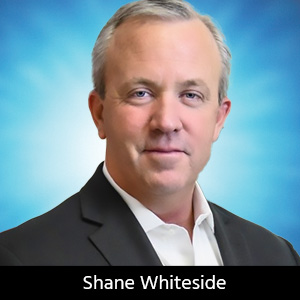
Ten years ago, Shane Whiteside had a vision for the dwindling North American PCB industry: to develop a company at scale that would put North American PCB manufacturing back on the map. The result was the combination of six PCB organizations and complementary businesses to create Summit Interconnect, now the second-largest PCB manufacturer in North America.
In this interview, Summit CEO Shane Whiteside and Vice President of Technology Gerry Partida reflect on Summit's 10th anniversary, the pride they take in what they've built, and the enthusiasm they still bring to the business as they celebrate this milestone.
Marcy LaRont: Shane and Gerry, congratulations on 10 years. It’s a great accomplishment. What was the impetus for starting Summit?
Shane Whiteside: The U.S. market over the preceding 15 years had undergone a period of rapid decline due to geographic migration to lower-cost regions. It was very fragmented. We thought there was a case for future growth and that was part of our original strategic thesis.
LaRont: Who helped you get the company started?
Whiteside: I worked with HCI Equity Partners (now known as Oridian Capital Partners), a private equity investor group based in Washington, D.C., that I had worked with many years before. I knew they were interested in the North American PCB market, so together we conducted extensive research, developed a strategic thesis, and began outreach to select companies.
We have been doing this for a long time, and from the beginning, we understood the importance of scaling our investments to acquire the people, organization, and capital equipment to be at the leading edge of technology.
The cash flow requirements to be the kind of manufacturing partner that your customers require keep getting more expensive every year. For example, when Gerry and I first started in manufacturing, a film-based platform with UV lights cost about $40,000. Now, an imaging platform costs 12-15x more because it's direct imaging. At one time, mechanical drills were the only choice; now a laser drill costs 5x more.
LaRont: That's an important point. After securing the investment, how did you get started?
Whiteside: We identified two outstanding companies with excellent reputations that could form the foundation of Summit. We purchased KCA Electronics in April 2016, and Marcel Electronics (MEI) soon after. MEI was known for producing highly complex rigid boards, HDI constructions, and for using advanced materials. KCA specialized in advanced rigid-flex manufacturing. Both had very interesting individual customer lists. Importantly for us, both companies provided a broad end-to-end product mix.
We started consolidating, not only the back-end systems of payroll, accounting, etc., but also our sales forces to give this new company one face to our customers. We put a lot of emphasis on cross-selling between the two customer bases and introducing customers to the expanded capabilities we could now offer. That approach generated organic growth almost immediately. At that time, Summit was just a small fraction of the size we are now.
To continue reading this interview, which appeared in the July 2026 I-Connect007 Magazine, click here.


