








NCAB Group White Papers: Practical PCB Design Guidance for Manufacturable Results
February 25, 2026 | I-Connect007 Editorial TeamEstimated reading time: 2 minutes
The I-Connect007 Industry Resource Center brings together expert white papers that help engineers and manufacturers navigate today’s design and manufacturing challenges across the PCB lifecycle.
NCAB Group contributes a valuable collection of white papers focused on practical PCB design and manufacturability. Drawing on their experience with a global network of production partners, NCAB helps engineers align design intent with fabrication realities: reducing risk while improving consistency and long-term reliability.
In “Semi-Flex Design Guidelines,” the team addresses applications that require limited bending without the added cost and complexity of fully flexible circuits. The paper explains how designers can select thin rigid FR-4 materials to enable controlled bending during installation, while emphasizing that semi-flex designs are best suited for static or limited-bend applications. Key considerations include minimum bend radius, copper distribution in bend areas, layer symmetry, and the use of flexible solder mask or coverlay to reduce mechanical stress.
NCAB extends its design-for-manufacturing approach in “Ultra HDI Design Guidelines,” which tackles the challenges of shrinking geometries and increasingly dense interconnect structures. The paper outlines practical design rules for microvias, pad sizes, dielectric thicknesses, and stackups that support both manufacturability and electrical performance as designs move beyond traditional HDI limits.
In “Stackups and Impedance Design Guidelines,” the focus is on the structural foundations that support signal integrity. This paper explains how symmetrical stackups, controlled dielectric spacing, and consistent copper weights help designers meet impedance targets while minimizing warpage in high-speed and high-frequency applications.
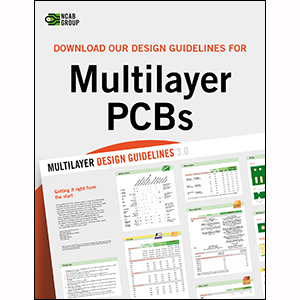
In “Multilayer Design Guidelines,” the authors address copper balance, via strategies, and drilling tolerances. These fundamentals help designers achieve stable manufacturing outcomes as board complexity and layer counts continue to increase.
Together, NCAB Group’s white papers reflect a design-for-manufacturing mindset. By translating fabrication constraints into actionable design guidance, the authors help engineers improve reliability, reduce rework, and achieve more predictable results.
Visit the I-Connect007 Industry Resource Center to explore these resources—and many more—designed to strengthen your PCB design strategy.
Subscribe
Stay ahead of the technologies shaping the future of electronics with our latest newsletter, Advanced Electronics Packaging Digest. Get expert insights on advanced packaging, materials, and system-level innovation, delivered straight to your inbox.
Subscribe now to stay informed, competitive, and connected.
Suggested Items
New Book Explores How UV Technology Is Transforming Electronics Protection, Efficiency, and Sustainability
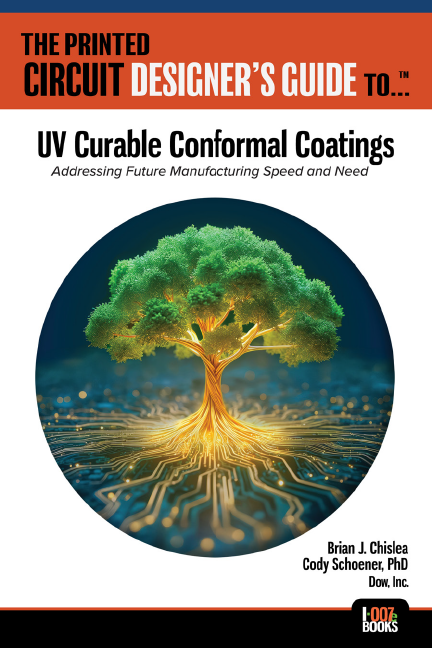
05/14/2026 | I-Connect007I-Connect007 proudly announces the recent release of The Printed Circuit Designer’s Guide to…™ UV Curable Conformal Coatings. Authored by respected industry technologists Brian Chislea and Cody Schoener, PhD, of Dow, Inc., this new volume offers a comprehensive exploration of UV-curable conformal coatings and their expanding role in improving the protection, performance, and sustainability of electronic assemblies.
Siemens Expands EDA Software Access Through EuroCDP Project
05/14/2026 | SiemensSiemens has become the first software provider to sign a strategic framework agreement with the European Chips Joint Undertaking (Chips JU) which aims to bolster Europe's semiconductor industry by fostering collaboration between the EU, member states and the private sector, through the European Chips Design Platform (EuroCDP) project.
Rethinking Stackup, Materials, and Tolerances in Modern Designs
05/14/2026 | Kristin Moyer, Global Electronics AssociationThe simple rectangular rigid PCB is becoming increasingly infrequent. This reality necessitates designing with concepts well outside traditional rigid PCB methodologies. For example, the designer of wearable electronics may need to implement conductive fibers integrated into the textile material. Heads-up displays, like those in VR/AR headsets and glasses, require transparent circuitry etched into the display glass. The process of designing without a rule book usually starts with something other than the traditional board design process.
New Courses: Advance Your Electronics Expertise in June and July
05/14/2026 | Global Electronics AssociationStay current with design, manufacturing, and quality standards by enrolling in one of these online instructor-led courses starting in June and July from ElectronicsU at the Global Electronics Association, designed to help professionals at every level sharpen their skills and advance their careers. These live, expert-led sessions combine flexibility with real-time interaction, allowing participants to learn directly from seasoned industry professionals while collaborating with peers worldwide. Access to all applicable IPC standards is included in the courses.
Road to Reliability: Engineering High Uptime EV Charging Infrastructure
05/13/2026 | Stanton Rak, SF Rak CompanyThe transition to EVs is no longer constrained solely by vehicle capability. Instead, it is increasingly defined by a simpler, but more unforgiving question: Will the charger work when I arrive? This high uptime does not happen by accident. As EV technology has matured, limitations in battery range, power electronics, and thermal management are no longer the primary barriers to adoption.