














 It’s Only Common Sense: How to Demonstrate Grace Under Pressure During Tough Times
 Trouble in Your Tank: Pre-electroless Causes of Voids
 Punching Out: Preparing Your PCB/EMS Business for Sale





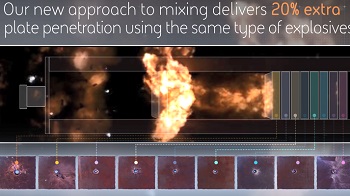
Our engineers have achieved a 20% increase in munition explosive power by mixing current polymer bonded explosives using resonant acoustic mixing (RAM) technology.
This has potential benefits for a range of products in advanced warheads as well as general artillery.
Lee Smurthwaite, Munitions Delivery Director at BAE Systems Land UK, explained: “This new explosive process means we can add 20 percent more power to existing product lines – both warheads and shells. Thinking about future designs, this means less explosive can be used to achieve the same effect, reducing both space and weight. You could use this space to install more tracking hardware to increase precision, or increase the amount of propellant to add speed and range.
“The defence industry is currently developing a new generation of advanced missiles, so our use of this technology could really push the boundaries of what’s possible.”
RAM has enabled us to make changes to the explosive formula that would not be possible using a traditional ‘bladed’ mixing process. As well as increased power, RAM brings a number of other benefits, including a significant reduction in mixing time and waste generated.
The next step is to increase the RAM capacity in our dedicated munitions facility in Glascoed, South Wales, so that it can start producing RAM munitions at scale. Additionally, the facility will be used to develop new forms of explosive designed for the next generation of advanced munitions.


