










 Flex Connections: Material Selection in Nickel vs. Copper Tabs
 Flex Connections: Four Lessons in Engineering Judgment for PCB Designers
 Flexible Thinking: ‘Let There Be Light’–Emitting Diodes!





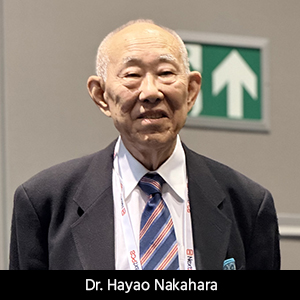
There’s plenty of good news in the PCB market right now, but Dr. Hayao Nakahara cautions against taking the growth numbers entirely at face value. Higher prices for memory and scarce materials are helping drive some impressive financial results, even as order volumes tell a somewhat different story. At the same time, AI servers and advanced packaging are creating opportunities that could reshape where PCB manufacturers invest next.
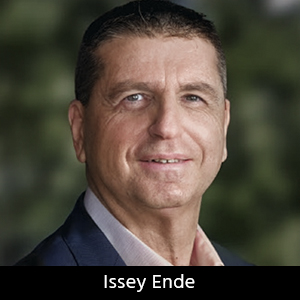
I heard that assessment on Wednesday morning at PCB West, where I had the pleasure of attending Dr. Nakahara’s market overview presentation before the expo opened. At 89 years old, he is as spry as ever, and his keen insight is not the least bit diminished. Show organizer Mike Buetow introduced “Naka,” as he is known to his friends, by saying that he visits more board shops in one year than most PCB professionals will see in their lifetime.
That became apparent pretty quickly. During his presentation, Nakahara said he has been able to verify the existence of more than 1,200 PCB shops in China, although the exact number is nearly impossible to pin down. So, how can he be so confident in that estimate? He has personally visited 700 of them. By any metric, that’s impressive.
Nakahara began his presentation with a history lesson. In 2000, much of the world’s PCB manufacturing migrated to China, including production from Taiwan, as OEMs pursued ever-lower manufacturing costs. That migration changed not only the PCB industry but also the world economy, helping propel China into one of the world’s two largest economies.
That history provides important context for where Nakahara sees the PCB industry today. Manufacturing remains heavily concentrated in Asia, but the market itself is entering another period of change, driven largely by AI, advanced packaging, and the technologies needed to support them.
Looking at PCB growth generally, Nakahara sees plenty of reason for optimism over the next few years. He cited strong global growth, including in the U.S., while pointing out just how concentrated the industry remains: Only 168 PCB companies worldwide generate more than $100 million in annual revenue, and the vast majority are Chinese.
But there’s an important caveat to those growth numbers. Nakahara cautioned that much of the extraordinary growth and profitability being reported right now comes from higher prices for memory and other products affected by supply constraints, including E-glass, T-glass, and copper, not necessarily from greater order volumes.
“Memory is now more than half of the total output,” he said. “Memory pricing went up five times. Price hikes make financial growth look huge but the volume is not much.”
The sweet spot for PCB fabricators is 40 layers or more, which means thick panels requiring three times more drills than would have been necessary before. Companies like Schmoll are having banner years, reporting a backlog of orders for drill machines into 2028. Excellon recently announced it will no longer be supporting spare parts for its older drill machines.
What Dr. Nakahara believes is most interesting in our industry today, though, is that the semiconductor chip is “worthless” unless it is packaged. Of the 2,500 PCB companies, only three (two in Japan and one in Taiwan) can produce the NVIDIA chip package PCBs. That leaves opportunity for growth and development over the next several years, something all the reigning experts seem to agree on. Now, Malaysia is the center of packaging, with projections that “package substrate output may reach $25 billion by 2030,” and cautioning the U.S. not to miss this opportunity.
To address the substrate shortage, the top 20 substrate companies are investing over $30 million; Ibiden has just invested $3.7 billion in its own IC substrate plants. But it will take three years to reach capacity for products in highest demand for AI data centers, including T-glass (M6, M7, M8, M9). Material prices are expected to rise 40% by the end of the year.
“I don’t care about the technology; it’s about the money,” Nakahara concluded. “It’s about investment.” Why does this matter? Because in places like the U.S., and likely Europe as well, domestic PCB growth is driven almost exclusively by the need to replace weapons, it is difficult to argue for investment dollars. As a side note, he added, that even if that investment is wanted, it is still very difficult and expensive to put up a PCB shop in most areas within the U.S. This is not a great recipe for growth, indicating that this growth is somewhat false and maybe relatively short-lived.


