








 Flex Connections: Material Selection in Nickel vs. Copper Tabs
 Flex Connections: Four Lessons in Engineering Judgment for PCB Designers
 Flexible Thinking: ‘Let There Be Light’–Emitting Diodes!





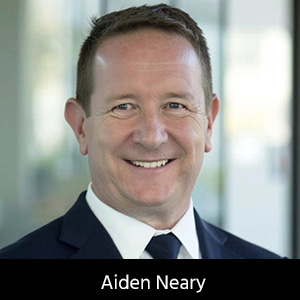
Xscindo is a start-up recycling company developing an alternative approach to conventional e-waste processing, focusing on transforming discarded electronics into clean, recoverable critical and precious metals rather than losing them to traditional disposal and recycling streams. Xscindo's work sits at the intersection of circularity, resource security, and a rapidly expanding need for critical materials, and speaks to a much larger challenge facing the electronics industry: finding better ways to keep valuable resources in circulation rather than exporting them. In this interview, Aiden Neary, founder and CEO, tells us more about this important work.
Marcy LaRont: Aiden, it is great to meet you. You've had an interesting career, so please introduce yourself and Xscindo. How did Xscindo begin?
Aiden Neary: My background is investment banking, not data security or retired electronics. I was hacked some years ago, which had made me conscious of data security. So several years ago, I began looking much more closely at what was happening in the electronics and data-security markets, and it became apparent to me that a gap was developing.
The amount of sensitive information we carry on electronic devices was increasing enormously, while at the same time, bad actors and data-recovery techniques were becoming more sophisticated. Yet the way we dealt with those devices at the end of their lives had not fundamentally kept pace.
That led me to look beyond data security and ask a much broader question: What actually happens to an electronic device at the end of its life?
Once you follow that journey, you quickly encounter not just data security, but landfill, plastics and PFAS, overseas exports, critical-material recovery, and a general lack of transparency. Xscindo grew out of trying to address those issues together rather than treating each one as a separate problem.
LaRont: What does Xscindo mean?
Neary: It is derived from the Latin word for “destroy.” The principle behind Xscindo is fairly simple: If an electronic device has reached the end of its useful life, we want to eliminate the liabilities associated with it, particularly the data and non-metal components, while recovering the metals and returning them to the domestic circular economy rather than allowing the device to end up in landfill.
To continue reading this interview, which appeared in the September 2026 I-Connect007 Magazine, click here.


