









 Flex Connections: Four Lessons in Engineering Judgment for PCB Designers
 Flexible Thinking: ‘Let There Be Light’–Emitting Diodes!
 Target Condition: Flex and Rigid-flex Solutions in A&D Display Electronics



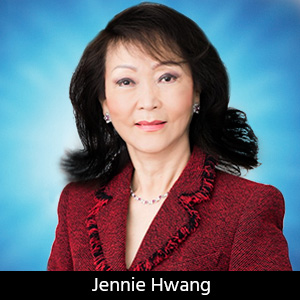
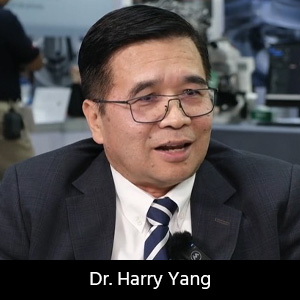
Dr. Jennie Hwang to deliver two PDCs on “AI-Powered Manufacturing: From Fundamentals to Factory Impact” (PDC5) and “Mastering Intermetallics for Reliable Electronics” (PDC2) at the 2026 SMTA International Conference.
Hwang is chair of the AI Committee of the National Academies/DoD AI study and chair of the National AI Institute of NSF, and Committee of Strategic Thinking for Engineering Research in the Era of Artificial Intelligence of NSF. She brings broad-based information and integrated insights to the AI course. Her leadership at the intersection of national policy, research strategy, and technological innovation provides participants with a comprehensive and forward-looking perspective on AI.
A pioneer and long-standing leader in SMT manufacturing and lead-free implementation, Dr. Hwang brings deep knowledge and broad experience to the reliability course. Her work spans both hands-on and advisory roles across commercial and military applications. Her comprehensive and discerning approach has solved some of the toughest reliability and production issues for Class 3 and mission-critical and safety-centric electronics.
Together, these courses offer practical working knowledge and pragmatic perspectives for professionals concerned with SMT manufacturing and product reliability, as well as those seeking a holistic understanding of the present and future landscape of AI and AI in electronics manufacturing.
Join your industry colleagues to hear the true authority in SMT manufacturing and product reliability at the SMTA International.
Tuesday, October 27 - 8:30AM – Noon
PD5 “AI-Powered Manufacturing: From Fundamentals to Factory Impact”
Artificial Intelligence is rapidly reshaping the foundations of modern industry, yet its true potential and practical application often remain unevenly understood. This course offers a balanced, insightful journey, beginning with a clear, accessible understanding of what AI is, how it works, and why it matters.
Building on this foundation, the discussion transitions to the manufacturing floor, where AI is moving beyond theory into measurable impact. Through real-world perspectives, the course explores AI in enhancing quality, yield, productivity, supply chain, and decision-making, while enabling a shift from traditional automation to more adaptive, intelligent, and autonomous systems.
Designed for engineers and managers alike, this course demystifies AI and delivers both clarity and action by bridging concepts and practice with a holistic perspective. Attendees will gain not only a deeper understanding of AI but also a practical lens for evaluating opportunities, navigating challenges, and leading in the age of AI-powered manufacturing.
Let’s transfer insights to impact. Stay at the forefront of AI – anytime, anywhere.
No prerequisites are required - join us to unlock AI’s power in electronics manufacturing and beyond, and gain practical insights, real-world use cases, and proven tips to put AI to work - walk away equipped to apply AI with clarity, confidence, and impact.
Monday, October 26 - 8:30AM – Noon
PDC2: “Mastering Intermetallics for Reliable Electronics”
The course offers all-encompassing knowledge on the subject, empowering participants to ensure and enhance product reliability. At the chip, package, and board levels of electronic assemblies, intermetallic compounds (IMCs) have become a defining factor in interconnection reliability, and ultimately, product success - playing a pivotal role in governing solder joint integrity and overall product reliability. As interconnect dimensions continue to shrink and performance demands intensify, understanding IMC formation, evolution, and control has become essential.
A focused, end-to-end understanding of IMCs, the course bridges scientific fundamentals with real-world manufacturing and reliability considerations. It examines IMC behavior across the full lifecycle of an interconnection - before formation, during reflow, and throughout storage and service. Both interfacial and bulk intermetallics are addressed, along with the critical influence of PCB surface finishes and component metallization on IMC development and long-term reliability.
Key distinctions between SnPb and Pb-free solder systems are explored, highlighting their implications for production-floor phenomena and field performance. The course also covers emerging lead-free alloys, including “low-temperature solders, “ with attention to their unique IMC characteristics and reliability trade-offs.
Participants are encouraged to bring their own materials systems or challenges for interactive discussion, enabling direct application of course insights to practical scenarios.
Let’s master Intermetallic Compounds (IMCs) for Reliable Electronics.


