













 American Made Advocacy: Rebuilding America’s Military Stockpiles Begins With Microelectronics
 The Right Approach: The End of an Era—DoD Proposes MIL-PRF-31032 Cancellation
 Defense Speak Interpreted: Hypersonics Report Back After Six Years of Silence





Printing Electronic Parts for Next-Generation Technologies at Argonne
March 13, 2026 | BUSINESS WIREEstimated reading time: 2 minutes
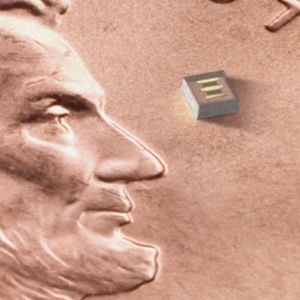
Tiny electronic devices, called microelectronics, may one day be printed as easily as words on a page, thanks to new research from scientists at the U.S. Department of Energy’s (DOE) Argonne National Laboratory. Building on years of progress in printed electronics, the team has shown how to create durable, low-power electronic switches, called transistors, by combining custom inks and a specialized printing process. These switches, which control the flow of electrical current to turn circuits on and off, use very little power, are built to last and show new behaviors not seen in earlier printed devices. This research could help create flexible sensors, smart windows and other new technologies that need reliable, energy-saving electronics.
The scientists used a method called aerosol jet printing, which works like an inkjet printer. But instead of regular ink, it uses specially formulated ink made from nanoparticles. The printer turns the ink into a fine mist and sprays it onto a surface, building up layers to form electronic parts.
A key ingredient in these printed devices is vanadium dioxide. This material is special because it can act like a wire, letting electricity flow, or like an insulator, blocking electricity. This switching ability is important for making electronic circuits and memory devices, which store and process information.
To control the flow of electricity in the transistors, the team used a process called redox gating. In simple terms, this means they use a chemical reaction to add or remove electrons from the vanadium dioxide. By applying a small voltage — less than what is used in a typical battery — they can turn the transistor on or off. This method is less harsh than other techniques, which could damage the material and make devices wear out quickly.
“We chose printing methods for two main reasons,” said Argonne Materials Scientist Yuepeng Zhang. “First, printing enables rapid prototyping and iterative design, which helps us optimize materials and device structures quickly. Second, printed electronics have benefits for device functionality, especially since our devices show a well-modulated current response to voltage, making them suitable for printed logic devices and niche applications.”
Wei Chen, a chemist from Argonne and the University of Chicago, emphasized the durability of the new devices. “Redox gating is robust and does not damage the materials, so we can run thousands of cycles without issues,” he said. “In previous methods, devices could only run a few times — sometimes just 10 cycles — before failing. Our devices can run thousands of cycles with no problem.”
Share on:


Testimonial
"Our marketing partnership with I-Connect007 is already delivering. Just a day after our press release went live, we received a direct inquiry about our updated products!"
Rachael Temple - AlltematedSuggested Items
ICAPE Group Reports Q1 2026 Revenue of €51.5 Million
05/06/2026 | ICAPE GroupQ1 2026 revenue of €51.5 million, up 2.2% compared to Q1 2025 (up +20% compared to Q1 2024), and up 4.6% compared to Q4 2025
Zhen Ding, Chung Yuan University Establish Green AI-PCB Co-Definition Laboratory
05/05/2026 | Zhen DingDriven by global AI demand and the imperative of green sustainability, Zhen Ding Technology Holding Limited held a donation and talent cultivation ceremony with Chung Yuan Christian University (CYCU) to establish the "Green AI-PCB Co-Definition Laboratory."
TTM Technologies Reports Sales Growth in Q1 2026
05/04/2026 | TTM TechnologiesNet sales in the first quarter of 2026 were $846.0 million, compared to $648.7 million in the first quarter of 2025.
KLA Reports Fiscal 2026 Q3 Results
04/30/2026 | PRNewswireKLA Corporation announced financial and operating results for its third quarter of fiscal year 2026, which ended on March 31, 2026, and reported GAAP net income of $1.20 billion and GAAP net income per diluted share of $9.12 on revenues of $3.415 billion.
Zhen Ding, Tsinghua University Launch Phase II R&D and Digital Transformation Program
04/30/2026 | Zhen DingZhen Ding Technology Holding Limited, a global leader in the PCB industry, held the launch ceremony for the Phase II (2026-2030) Industry-Academia Collaboration Program of the Zhen Ding-Tsinghua Joint Research Center at the Zhen Ding Technology Lecture Hall on the Tsinghua University campus.