










Why AI/ML May Be the Next Big Step for PCB Fabs
December 23, 2025 | Sydney Xiao, Global Electronics Association East AsiaEstimated reading time: 1 minute
PCB manufacturing is approaching a pivotal moment across the global electronics supply chain. For decades, the industry grew by adding equipment, expanding capacity, and relying on the accumulated experience of seasoned engineers. Today, the landscape is shaped by rising product complexity, increasingly sensitive material systems, tighter delivery expectations, and a worldwide shortage of technical talent. The traditional model is nearing its limits.
This is precisely why artificial intelligence (AI) and machine learning (ML) are entering the mainstream conversation—not as abstract concepts or futuristic visions, but as practical capabilities that address the most pressing challenges PCB fabs now face: predictability, stability, cross-process understanding, and the ability to manage complexity at a scale humans alone can no longer handle.
Why PCB Fabs Are ‘Needy’ for AI/ML
PCB fabrication is a long, interdependent chain of processes. Lamination affects drilling, drilling influences plating, plating affects imaging, and so on. Small deviations cause ripples in ways that even experienced engineers may not fully anticipate. As product requirements rise, decision-making based solely on individual experience becomes increasingly fragile.
At the same time, the industry faces a structural shift: fewer young professionals are choosing factory careers, and knowledge is becoming more concentrated than ever and is becoming increasingly difficult to transfer. The result is a growing gap between what fabs need and what traditional engineering models can supply.
To continue reading this article, which originally appeared in the December 2025 editon of PCB007 Magazine, click here.
Testimonial
"The I-Connect007 team is outstanding—kind, responsive, and a true marketing partner. Their design team created fresh, eye-catching ads, and their editorial support polished our content to let our brand shine. Thank you all! "
Sweeney Ng - CEE PCBSuggested Items
Three Howard University Engineers Launch Trace to Automate PCB Design Workflows
05/12/2026 | Globe NewswireTrace, an AI software company automating the printed circuit board (PCB) design workflow, has launched out of stealth and is now accepting customers worldwide.
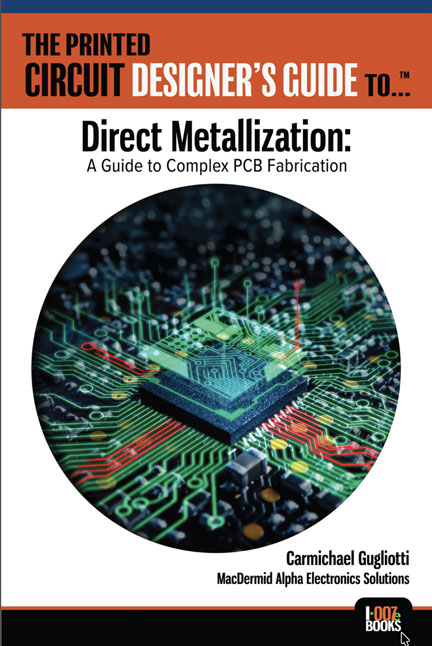
I-Connect007 Releases The Printed Circuit Designer’s Guide to… Direct Metallization: A Guide to Complex PCB Fabrication
05/12/2026 | I-Connect007As PCB complexity continues to accelerate, fabricators and OEMs are reevaluating long-standing manufacturing processes to meet the demands of AI, HDI, advanced packaging, and next-generation electronics. To address these evolving challenges, I-Connect007 is proud to announce the release of The Printed Circuit Designer’s Guide to… Direct Metallization: A Guide to Complex PCB Fabrication, authored by MacDermid Alpha Solution’s Carmichael Gugliotti.
yieldWerx, WATS Partner to Bridge PCB Test with Chip-Level Manufacturing Data
05/11/2026 | PRNewswireBoard-level and semiconductor test data are often analyzed separately, limiting correlation across the product lifecycle. Linking PCB assembly (PCBA) test results, including in-circuit and functional test, with upstream wafer, sort, and final test data remains difficult, particularly in photonics, advanced packaging, and high-density integration environments.
Rogers Announces Addition of Brett Cope and Eric Starkloff to Its Board of Directors
05/11/2026 | Rogers CorporationRogers Corporation announced that Brett Cope and Eric Starkloff were elected to the Company’s Board of Directors. Both Mr. Cope and Mr. Starkloff bring extensive executive leadership experience and deep expertise in highly relevant markets.
The Journey from Dilution to Zero Liquid Discharge
05/11/2026 | Richard Nichols, GreenSource EngineeringIf you’re familiar with the PCB industry, and a little long in the tooth like me, you may remember the cry, “The water board is here!” (or an equivalent authority). This was the signal for a frantic but regularly rehearsed exercise to turn on all the rinses. This anecdote demonstrates that in the early days of PCB production, prevailing practices revolved around a “dilution is the solution” mentality, in which manufacturers used copious amounts of water to dilute contaminants before discharging them into regulated municipal wastewater systems or natural water bodies.