














 Knocking Down the Bone Pile: Interposer Rework and Precision Solder Ball Attachment
 Standard of Excellence: AI Makes It Possible, and Engineers Make It Happen
 The Fearless Connector: Why I Chose the Hard Road






Standard of Excellence: AI Makes It Possible, and Engineers Make It Happen
It’s impossible to deny the impact of AI in manufacturing, engineering, and electronics. Every day, we read about new AI platforms, automated design tools, predictive analytics, intelligent inspection systems, and digital assistants capable of generating reports, reviewing documentation, or analyzing vast amounts of data in seconds. The excitement is justified because AI is transforming the way we do business.
Yet amid all the enthusiasm, it’s important to understand that AI cannot replace engineering excellence. But it can amplify it.
Do you want to be a manufacturing leader in the future? Don’t just buy AI software because it’s new. Be an organization that combines experienced engineers with intelligent technology to create faster, smarter, and more reliable decision-making throughout the entire product lifecycle.
Manufacturing has never been about replacing human judgment. It has always been about improving it.
We face extraordinary challenges in our industry. Products are becoming smaller, faster, and significantly more complex. Material options are expanding, component availability changes rapidly, and customers demand shorter development cycles while expecting flawless quality and complete documentation. At the same time, manufacturers must manage sophisticated supply chains, tighter tolerances, higher reliability standards, and growing regulatory requirements.
No engineering team can manually process this volume of information as efficiently as AI can. It excels at identifying patterns, comparing thousands of design variables, evaluating historical manufacturing data, reviewing documentation, monitoring supplier information, and highlighting potential issues before they become costly problems. Tasks that once required days of manual analysis can now often be completed in minutes.
During design reviews, AI can quickly identify manufacturability concerns, spacing violations, material conflicts, and process limitations that deserve further engineering evaluation. It can compare current layouts with thousands of previous manufacturing builds, helping engineers recognize recurring issues before prototypes are fabricated.
The result is not fewer engineers, but better engineers with better information, and that provides you with a significant opportunity. When engineers understand fabrication capabilities, you will consistently produce products that are easier to build, more reliable, and less expensive to manufacture.
AI dramatically accelerates this process by analyzing design data against manufacturing rules, historical yield information, and production experience almost instantly. Instead of spending valuable engineering hours searching for potential issues, teams can devote more time to solving them creatively.
The same advantage extends well beyond engineering.
Sourcing organizations are using AI to evaluate supplier performance, monitor geopolitical risks, identify alternate component sources, analyze inventory trends, and forecast material availability. Procurement professionals gain faster access to meaningful insights while maintaining responsibility for final sourcing decisions.
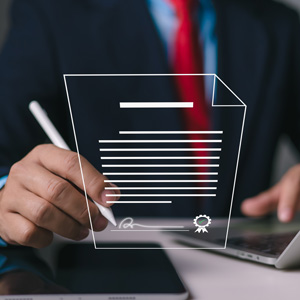
Documentation also benefits significantly. You see that in everything from manufacturing instructions, inspection plans, and process documentation to revision control, technical reports, and customer communications, all of which require enormous amounts of time and consistency. AI can organize information, improve formatting, identify inconsistencies, and accelerate document preparation, allowing technical professionals to focus on technical accuracy rather than repetitive administrative work.
These productivity improvements create measurable business value: Projects move faster, engineering teams become more responsive, customers receive answers sooner, product introductions accelerate, and manufacturing organizations become more agile.
Yet none of these advantages eliminates the need for experienced professionals. AI has no practical experience building complex circuit boards. It has never diagnosed an unexpected process variation on the manufacturing floor or worked directly with customers whose unique applications require unconventional engineering solutions. It has never balanced competing design objectives while considering long-term reliability, cost, manufacturability, and production scalability simultaneously.
Experienced engineers do that every day. Their judgment comes from years of observation, experimentation, collaboration, and problem-solving. It includes intuition developed through countless product launches, manufacturing challenges, customer interactions, and continuous learning.
AI may recommend several possible solutions, but experienced engineers determine which solution is appropriate for the specific application. That partnership between technology and human expertise is where true competitive advantage emerges.
Rather than inserting AI into isolated tasks, integrate it throughout your entire workflows. Engineering collaborates with manufacturing. Manufacturing collaborates with sourcing. Sourcing shares intelligence with quality. Quality provides data that continuously improves engineering decisions. Every department benefits from shared information that becomes progressively more valuable over time.
AI becomes part of an interconnected operating system instead of a standalone application.
Instead of fearing AI, successful organizations teach employees how to use it effectively, and it becomes another engineering tool.
Just as computer-aided design revolutionized product development without replacing designers, AI is enhancing engineering capabilities without replacing engineers.
History has consistently demonstrated that technological breakthroughs reward organizations willing to adapt thoughtfully rather than react emotionally.
Companies that embraced CAD, digital manufacturing, automated inspection, simulation software, and advanced manufacturing systems gained substantial competitive advantages. Those who resisted eventually found themselves struggling to compete. AI represents the next evolution of that journey.
The companies that invest today in training their people, integrating intelligent systems, improving data quality, and fostering collaboration between engineers and AI will establish higher standards of excellence than ever before:
- Engineering teams will make better decisions because they will have better information
- Manufacturing operations will become more efficient because processes will continuously improve through data-driven insights
- Customers will benefit from shorter development cycles, greater reliability, higher quality, and faster responses to technical challenges
- Organizations will strengthen something that technology alone can never replace: customer confidence
Customers are not looking for suppliers that merely use AI. They are looking for manufacturing partners that consistently deliver exceptional engineering, dependable quality, responsive service, and innovative solutions.
AI helps make those outcomes possible, and people make them happen. That is a true standard of excellence.
Anaya Vardya is president and CEO of American Standard Circuits; co-author of The Printed Circuit Designer’s Guide to… Fundamentals of RF/Microwave PCBs and Flex and Rigid-Flex Fundamentals. He is the author of Thermal Management: A Fabricator's Perspective and The Companion Guide to Flex and Rigid-Flex Fundamentals


