






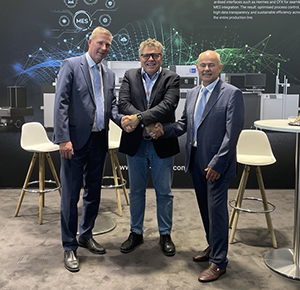








 The Fearless Connector: Why I Chose the Hard Road
 The Clean Truth: The Clean Truth About No-Clean Flux
 Global Sourcing Spotlight: Beyond China Plus One—Building a Truly Global Supply Network





Next-generation optoelectronic systems (devices that convert light to electrical energy) leverage organic semiconductor-based indoor energy-autonomous architectures for cutting-edge applications. Notably, organic semiconductors possess mechanical flexibility, solution processability, and bandgap-tunable optoelectronic properties, making them highly lucrative for indoor power generation via organic photovoltaics (OPVs), as well as for spectrally selective photodetection through organic photodetectors (OPDs). Unfortunately, technological progress made in the fields of OPVs and OPDs has largely been separate, necessitating further research for the development of bifunctional OPV-OPD systems for concurrent energy harvesting and photodetection.
Additionally, the potential self-powered operation of such systems is restricted by conflicting charge transport kinetics, especially in the electron and hole transport layers (ETLs and HTLs, respectively). This limitation impacts device durability and stability and increases fabrication costs, making it indispensable to find new HTL materials such as poly(3,4-ethylenedioxythiophene), 2-(9H-carbazol-9-yl)ethyl]phosphonic acid self-assembled monolayer, MoOx, NiOx, and V2O5, beyond conventional options.
In a pioneering study, a team of researchers led by Associate Professor Jea Woong Jo from the Department of Energy and Materials Engineering, Dongguk University, and Associate Professor Jae Won Shim, School of Electrical Engineering, Korea University, has presented benzene-phosphonic acid (BPA) as an innovative minimalist self-assembled monolayer-based HTL. It comprises a benzene core and phosphonic acid anchoring group, facilitating low-cost synthesis and desirable indium tin oxide interfacial properties, including energy alignment, uniform monolayer, and stability. These novel findings were made available online on 6 September 2025 and have been published in Volume 38, Issue 1 of the journal Advanced Materials on 2 January 2026.
The key innovation of this research is the development of 'minimalist' molecular bridge BPA that resolves a fundamental conflict in electronics by enabling a single device to operate as both an efficient indoor solar cell and a high-sensitivity light sensor. Dr. Jo highlights the multifaceted advantages of their HTL material, "BPA concurrently provides energy level alignment with a photoactive layer for unimpeded hole-selective contact in the OPV mode, charge blocking capability for minimizing noise current in the OPD mode, robust ambient stability combined with simple and scalable manufacturability, as well as system-level economic viability, reflected in a high power-per-cost ratio under real-world indoor operating conditions."
The bifunctional devices based on the proposed material could power the next generation of smart environments by enabling self-powered Internet of Things (IoT) sensors, wearable health monitors that harvest ambient light, and large-scale interactive 'skins' on indoor surfaces that simultaneously collect energy and sense data without the need for external power sources or batteries. By enabling efficient indoor energy harvesting, this work could drastically reduce the global reliance on disposable batteries for billions of sensors, promoting long-term environmental sustainability. Furthermore, the minimalist synthesis approach significantly lowers fabrication costs, making high-performance electronics economically viable for mass deployment.
"Overall, synergy between performance and commercial practicality positions our BPA-HTL as a transformative enabler for self-powered IoT and wearable optoelectronics," concludes Dr. Shim. In the next 5 to 10 years, these advancements could hasten the realization of next-generation communication networks and fully smart environments, where self-powered devices provide ubiquitous, seamless connectivity without the ecological or financial burden of current technologies.


