











-
- News
- Books
Featured Books
- smt007 Magazine
Latest Issues
Current Issue
Spotlight on North America
A North America spotlight exploring tariffs, reshoring, AI demand, and supply chain challenges. Plus, insights on cybersecurity, workforce development, and the evolving role of U.S. electronics manufacturing.
Wire Harness Solutions
Explore what’s shaping wire harness manufacturing, and how new solutions are helping companies streamline operations and better support EMS providers. Take a closer look at what’s driving the shift.
Spotlight on Europe
As Europe’s defense priorities grow and supply chains are reassessed, industry and policymakers are pushing to rebuild regional capability. This issue explores how Europe is reshaping its electronics ecosystem for a more resilient future.
- Articles
- Columns
- Links
- Media kit
||| MENU - smt007 Magazine
Beyond IPC-2152: Creating Technology-specific Current-carrying Capacity Design Charts Using Thermal Modeling
January 29, 2026 | Mike Jouppi, Thermal Management LLCEstimated reading time: 2 minutes
Designers commonly size traces using online calculators based on IPC-2221 or IPC-2152 charts, selecting width and thickness for a given current and allowable temperature rise (ΔT). Consideration is given to parallel conductors, although this is not a practical evaluation method for most designs. An important aspect of trace heating, especially groups of traces, is the power dissipated by the conductors. Unfortunately, the power dissipation or a method for accounting for power losses in the traces/conductors or planes is not straightforward.
The thermal design of a PCB must consider all components, their power requirements, board material, board stackup, mounting conditions, environmental conditions, and trace/conductor power losses. PCB thermal analysis considers both steady state and transient conditions. We will discuss steady-state trace heating.
It's a common practice to determine a trace size based on current, steady-state temperature rise, and trace cross-sectional area. The issue is that the IPC chart temperature rise is much higher than what would be found for most designs. Additionally, trace power is not initially assessed, leaving a significant amount of power, especially in high-current designs, to be managed later in the design cycle.
Consider a previous PCB design used to create design charts for that PCB technology. A process for creating technology-specific design charts (TSDC) can be used to develop conductor sizing design charts that account for all PCB thermal design parameters. This provides a lot of new insights into your board technology. This process for generating PCB-specific current-capacity charts is documented in U.S. Provisional Patent 63/875,465.
It’s possible to evaluate the varying current-carrying capability around different areas of the board that have more or less copper. Design charts can be made for many different environmental conditions, such as on a lab bench or for worst-case operating conditions. A previous design is not necessary; it simply minimizes iterations and provides the designer with a lot more useful information.
To continue reading this article, which originally appeared in the January 2026 I-Connect007 Magazine, click here.
Testimonial
"In a year when every marketing dollar mattered, I chose to keep I-Connect007 in our 2025 plan. Their commitment to high-quality, insightful content aligns with Koh Young’s values and helps readers navigate a changing industry. "
Brent Fischthal - Koh YoungSuggested Items
New Book Explores How UV Technology Is Transforming Electronics Protection, Efficiency, and Sustainability
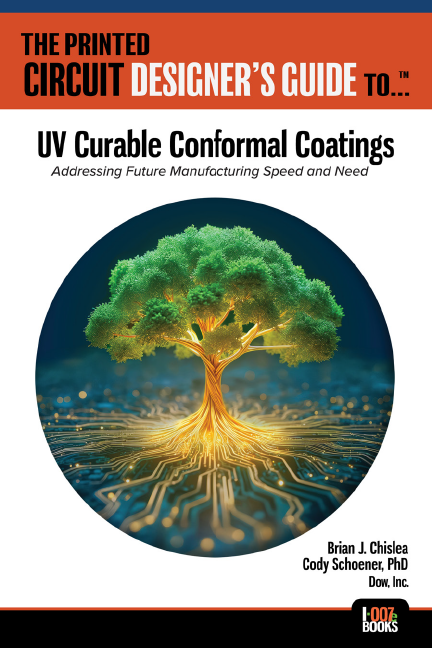
05/14/2026 | I-Connect007I-Connect007 proudly announces the recent release of The Printed Circuit Designer’s Guide to…™ UV Curable Conformal Coatings, the latest installment in its highly regarded Printed Circuit Designer’s Guide to…™ book series. Authored by respected industry technologists Brian Chislea and Cody Schoener, PhD, of Dow, Inc., this new volume offers a comprehensive exploration of UV-curable conformal coatings and their expanding role in improving the protection, performance, and sustainability of electronic assemblies.
Siemens Expands EDA Software Access Through EuroCDP Project
05/14/2026 | SiemensSiemens has become the first software provider to sign a strategic framework agreement with the European Chips Joint Undertaking (Chips JU) which aims to bolster Europe's semiconductor industry by fostering collaboration between the EU, member states and the private sector, through the European Chips Design Platform (EuroCDP) project.
Rethinking Stackup, Materials, and Tolerances in Modern Designs
05/14/2026 | Kristin Moyer, Global Electronics AssociationThe simple rectangular rigid PCB is becoming increasingly infrequent. This reality necessitates designing with concepts well outside traditional rigid PCB methodologies. For example, the designer of wearable electronics may need to implement conductive fibers integrated into the textile material. Heads-up displays, like those in VR/AR headsets and glasses, require transparent circuitry etched into the display glass. The process of designing without a rule book usually starts with something other than the traditional board design process.
New Courses: Advance Your Electronics Expertise in June and July
05/14/2026 | Global Electronics AssociationStay current with design, manufacturing, and quality standards by enrolling in one of these online instructor-led courses starting in June and July from ElectronicsU at the Global Electronics Association, designed to help professionals at every level sharpen their skills and advance their careers. These live, expert-led sessions combine flexibility with real-time interaction, allowing participants to learn directly from seasoned industry professionals while collaborating with peers worldwide. Access to all applicable IPC standards is included in the courses.
Road to Reliability: Engineering High Uptime EV Charging Infrastructure
05/13/2026 | Stanton Rak, SF Rak CompanyThe transition to EVs is no longer constrained solely by vehicle capability. Instead, it is increasingly defined by a simpler, but more unforgiving question: Will the charger work when I arrive? This high uptime does not happen by accident. As EV technology has matured, limitations in battery range, power electronics, and thermal management are no longer the primary barriers to adoption.